Serving Corona, CA and surrounding areas.(951) 555-0174
Circle City Corona Concrete

Temescal Valley Concrete Poured Over Expansive Foothill Clay

We form patios, wide driveways, and reinforced footings engineered for the shifting foothill soil across Wildrose Ranch and Horsethief Canyon. Call our crew to book a site visit.

Google reviewsFacebook reviewsBetter Business Bureau reviews5.0 Stars Rated by our customers · Google, Facebook and the BBB
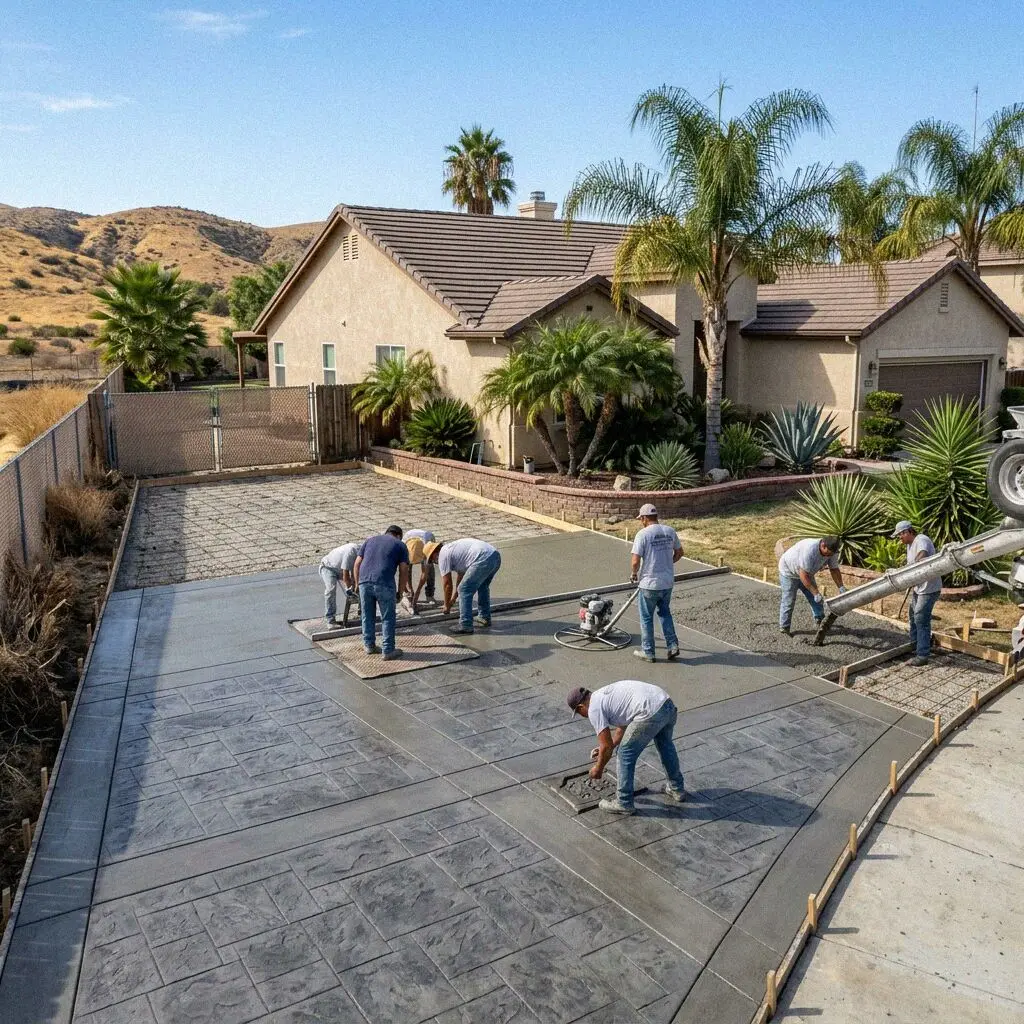
Pouring a reinforced concrete driveway in Temescal Valley

Why Temescal Valley Concrete Demands Rock Subbase

Foothill soils along the canyon basin shrink and swell with seasonal rain, meaning every slab must rest on a four-inch layer of crushed aggregate to prevent structural cracking.

Data from the USDA Web Soil Survey shows that Temescal Valley soils contain dense alluvial loam mixed with high plasticity clays that expand during heavy winter runoff. When moisture evaporates under intense canyon heat, the earth shrinks and drops away from flatwork edges. Without mechanical compaction down past the uncompacted top layer, unreinforced concrete snaps along internal stress lines as shifting subgrade hollows out support beneath the slab.

Census records record owner-occupied homes at 85.9% across Temescal Valley, meaning residents prioritize structural durability over short-term cosmetic fixes. We install steel rebar grids tied on chairs rather than light wire mesh, keeping metal suspended in the center of the pour where tensile strength works. Combined with saw-cut control joints spaced ten feet apart, this system stops cracking before it spreads across wide driveway surfaces.

Concrete We Pour in Temescal Valley

Every slab in this canyon must account for deep drainage paths, dense adobe clay subgrades, and heavy sun exposure that crack improperly compacted pours across local developments.

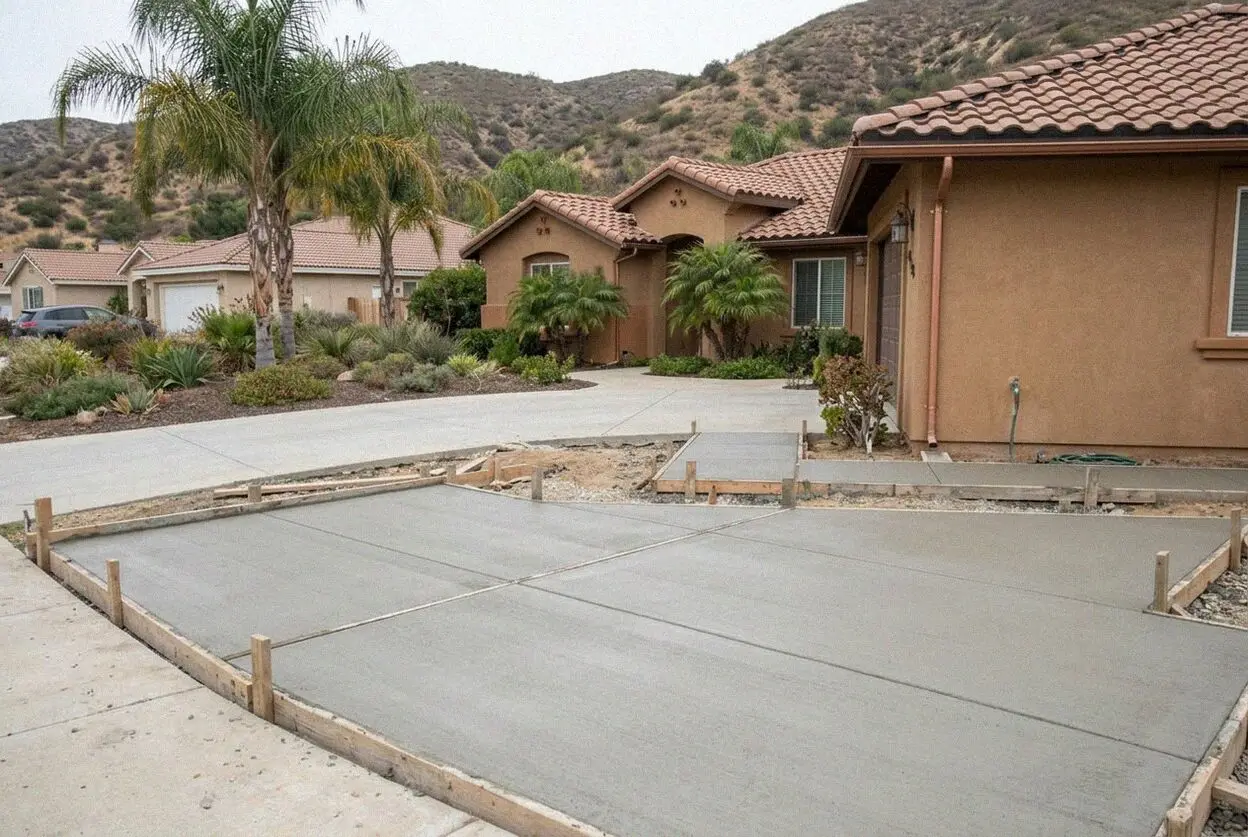
Fresh concrete driveway pour at a single family home in Corona

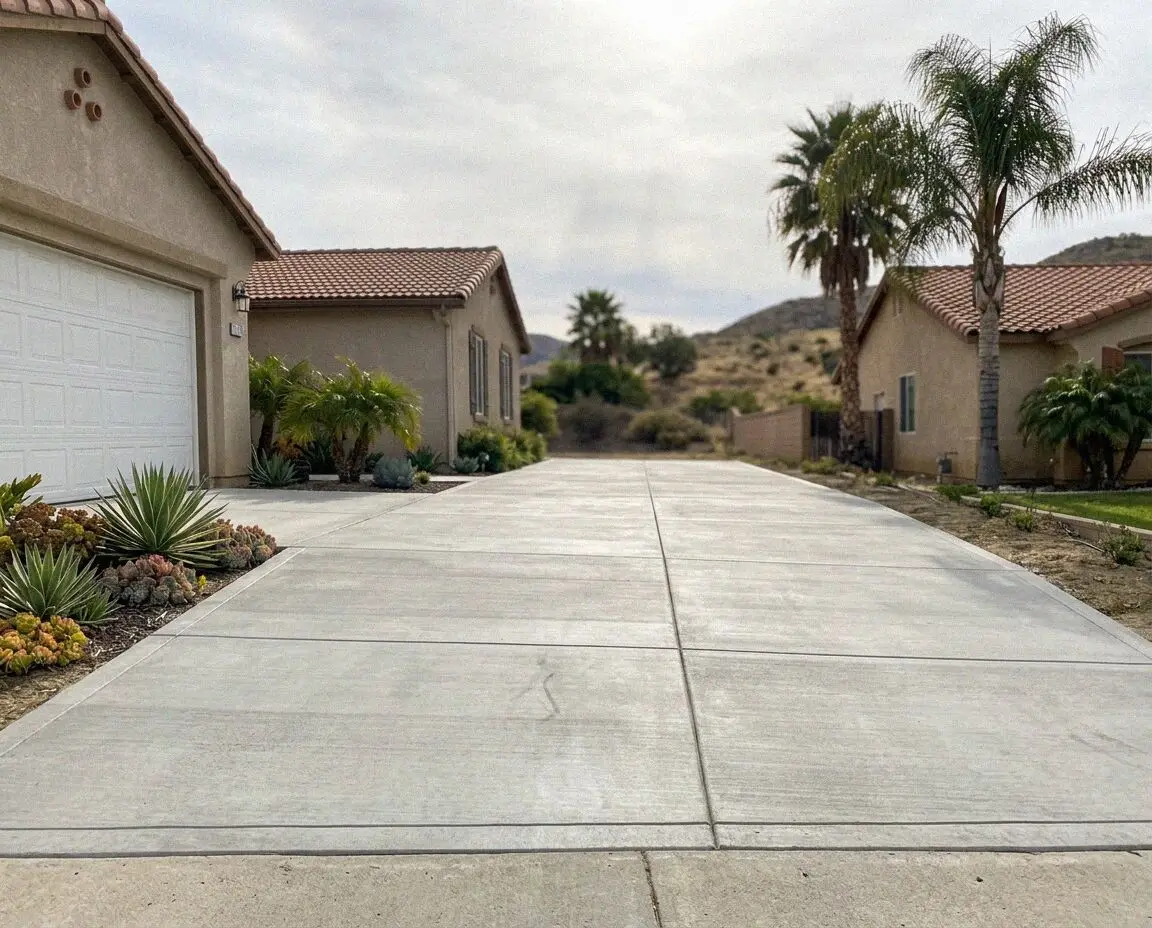
Concrete Driveway Building

Driveway pours in Temescal Valley handle steep grade changes from street to garage along the Santa Ana mountain foothills. We pour four inches of 4,000 PSI concrete over compacted crushed rock so loaded trucks enter without cracking unreinforced corners on the incline.

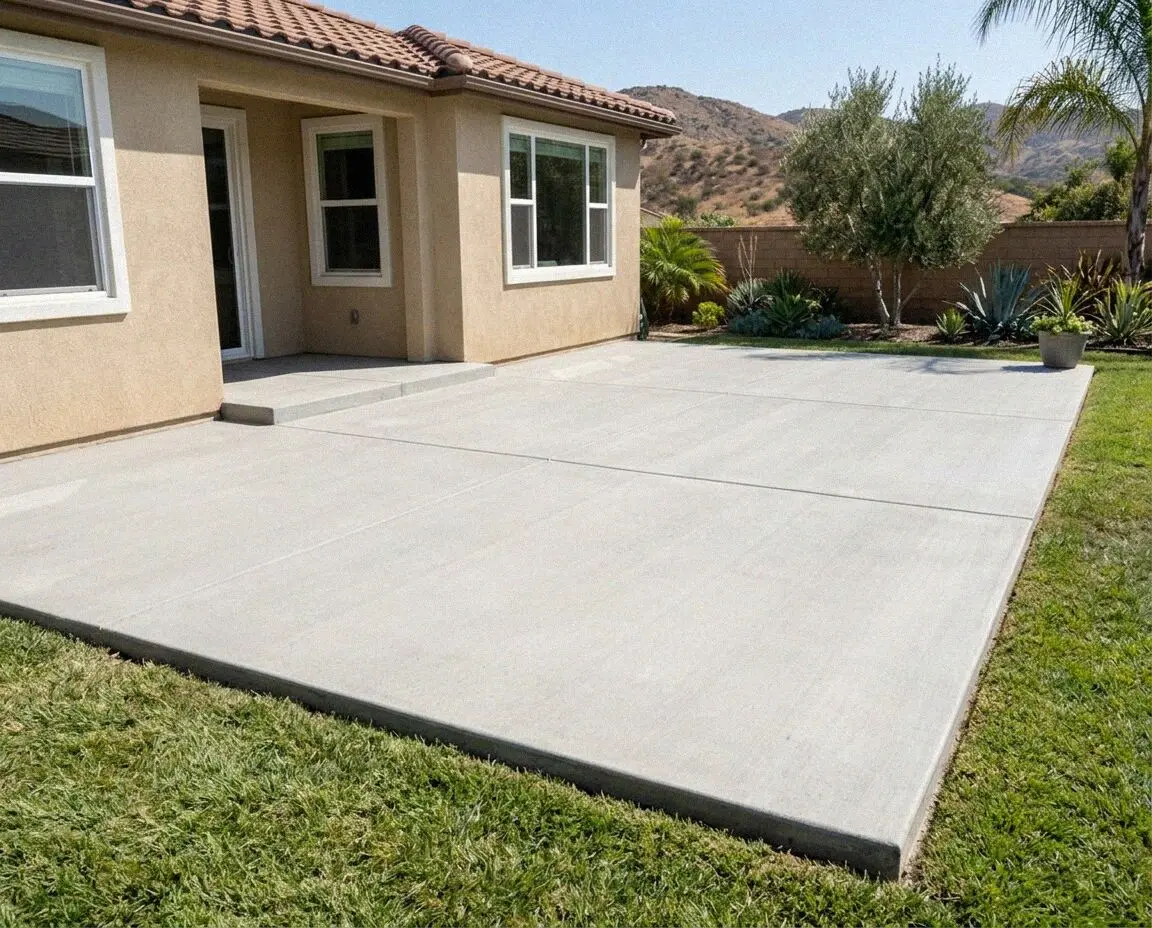
Finished concrete patio slab with broom texture at a Corona home

Concrete Patio Construction

Patio additions expand outdoor living for two story homes built after 2001 across Sycamore Creek. Builders poured basic rear steps that left dirt borders, so we form broad outdoor patios tied directly to the perimeter stem wall with rebar pins to stop rear settling.

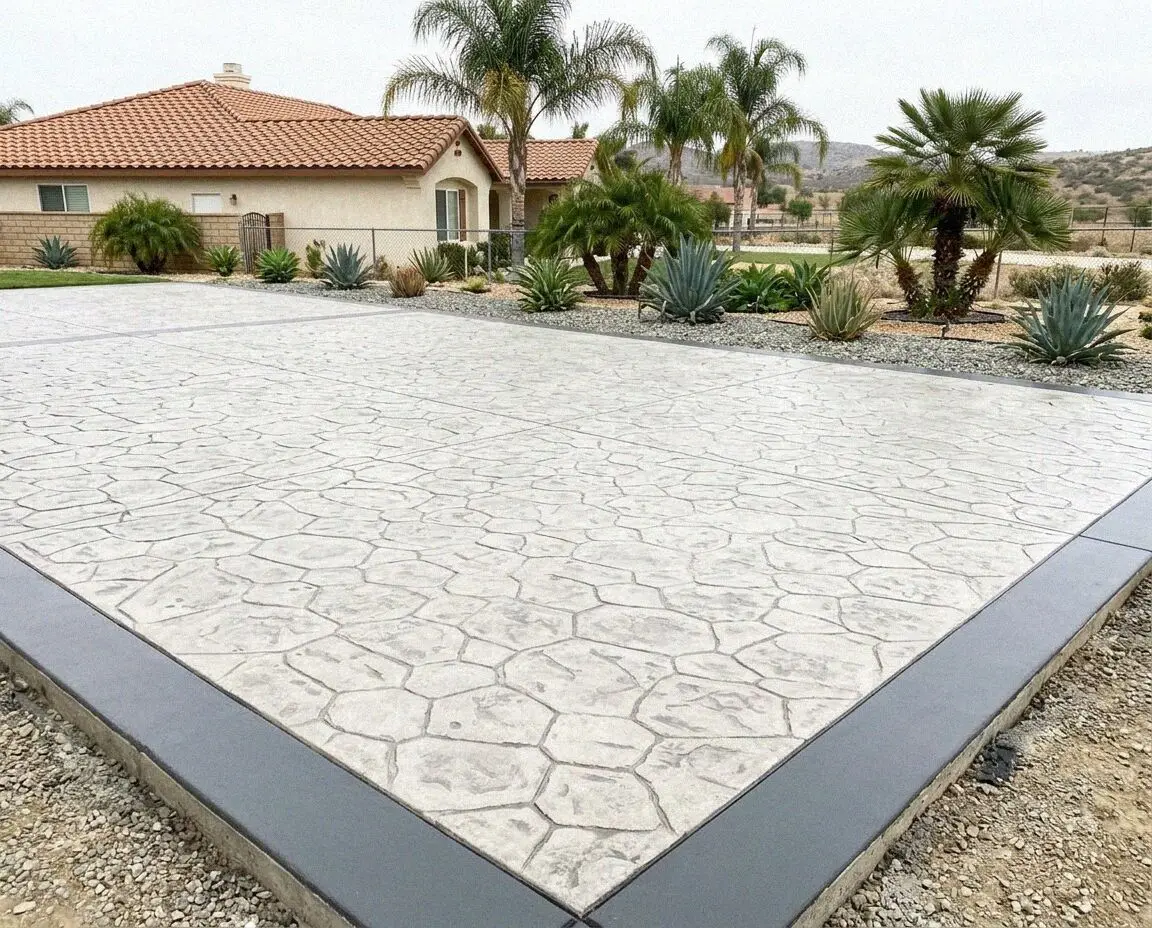
Decorative stamped patio pour at a single family home in Corona

Stamped Concrete Services

Foundation slabs poured near Temescal Wash encounter subsoil moisture that heaves unreinforced flatwork during winter storms. We excavate down 12 inches, place a vapor barrier, and pour steel tied grade beams that isolate the structure from shifting riparian clay beds.

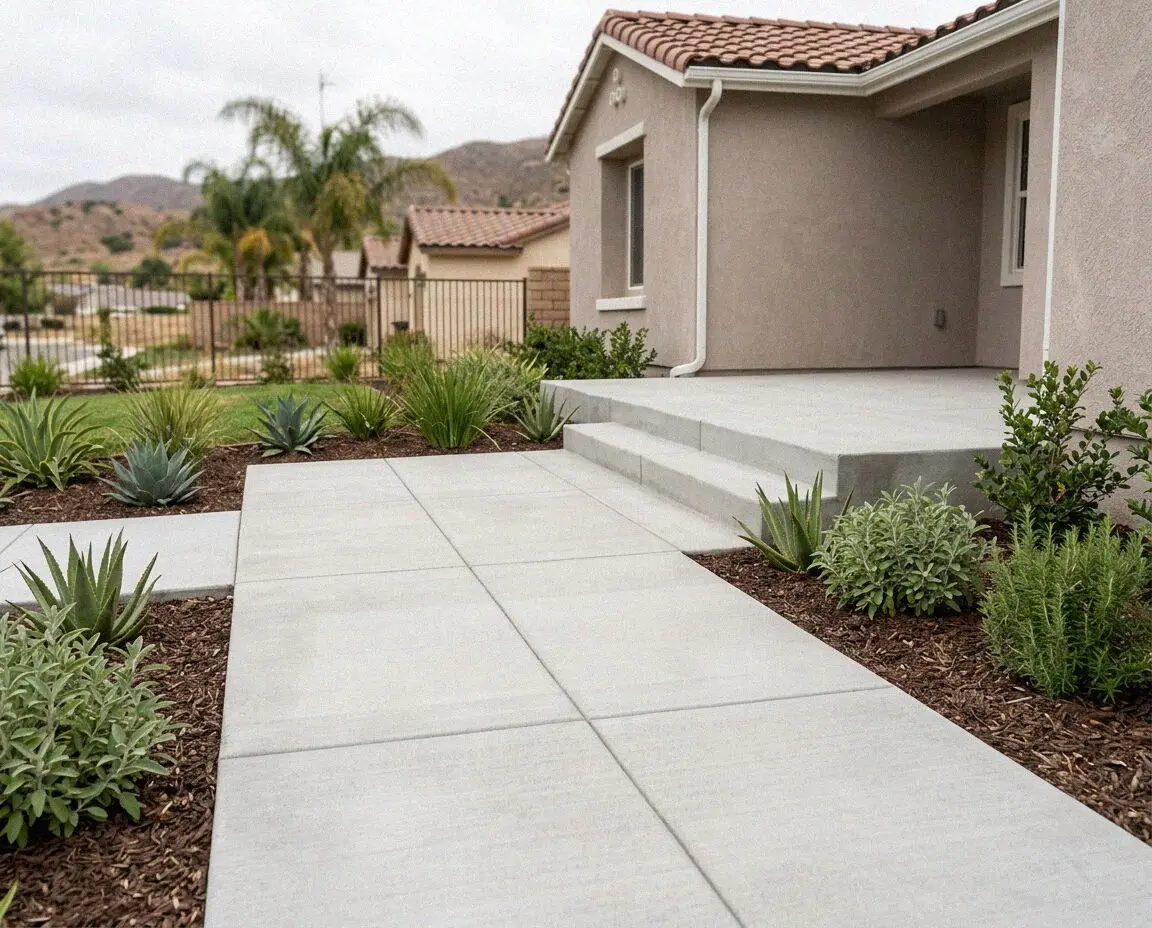
Finished concrete sidewalk along a single family front yard in Corona

Concrete Sidewalk Building

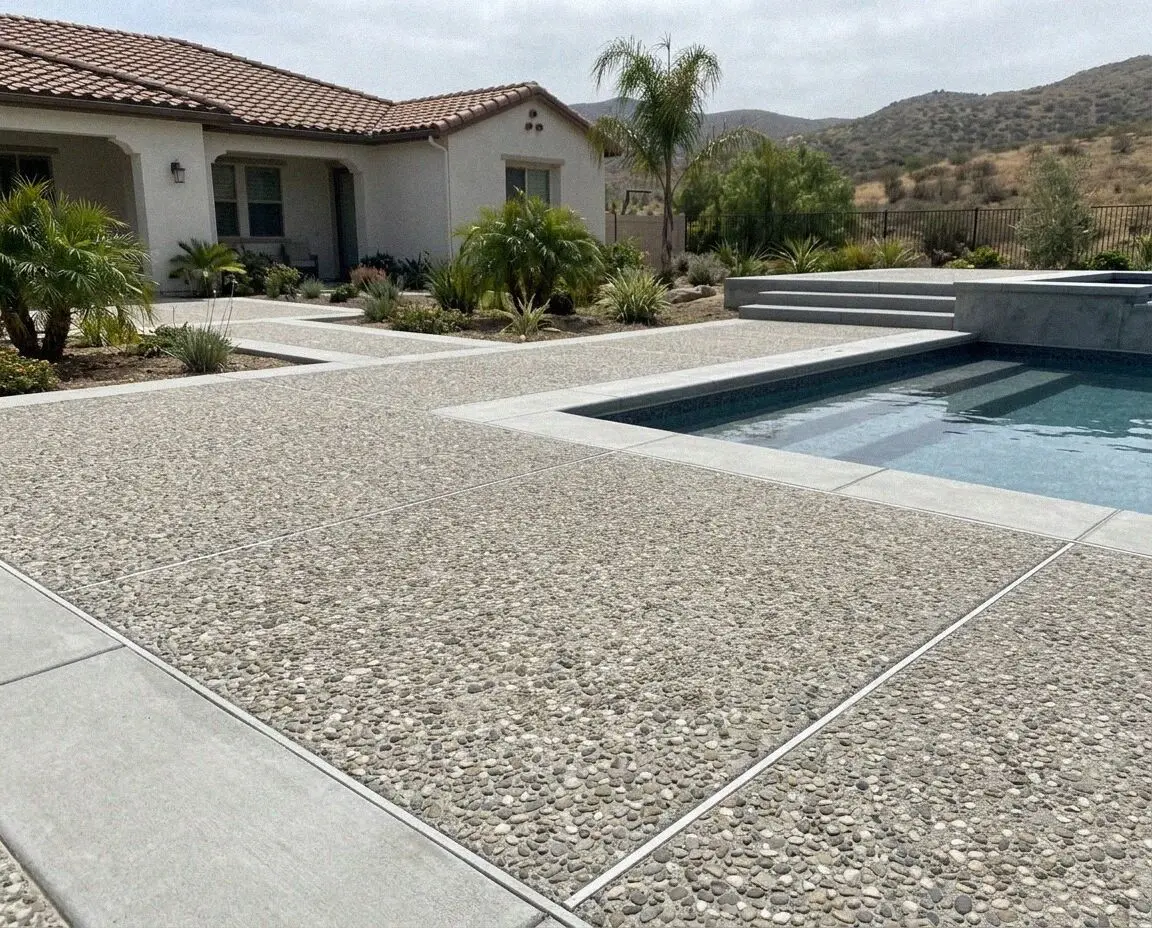
Pool deck concrete in Horsethief Canyon endures dry valley heat exceeding 100 degrees that evaporates pour water too quickly. We spray curing compounds immediately after troweling and cut expansion joints every eight feet so pool coping never separates under thermal shock.

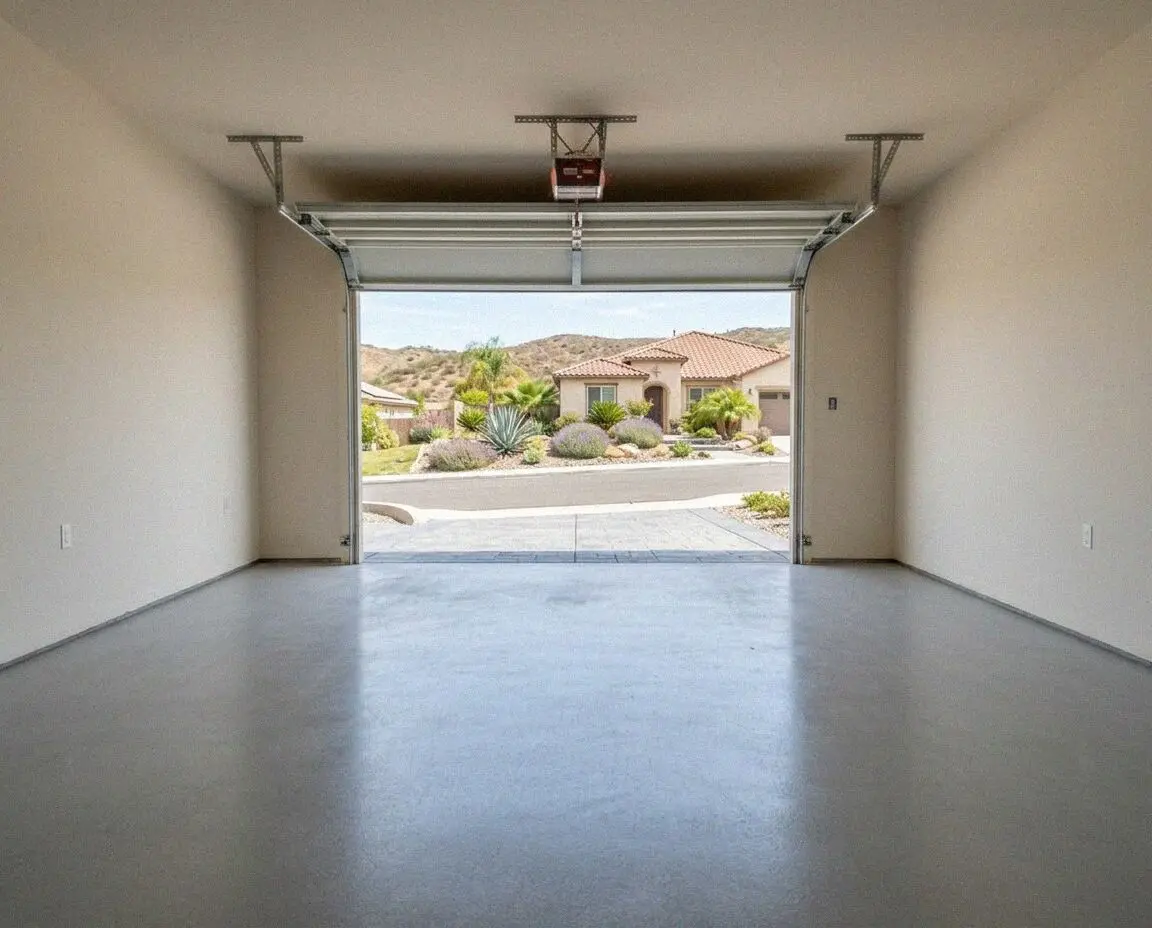
Fresh concrete garage floor pour at a single family house in Corona

Garage Floor Concrete

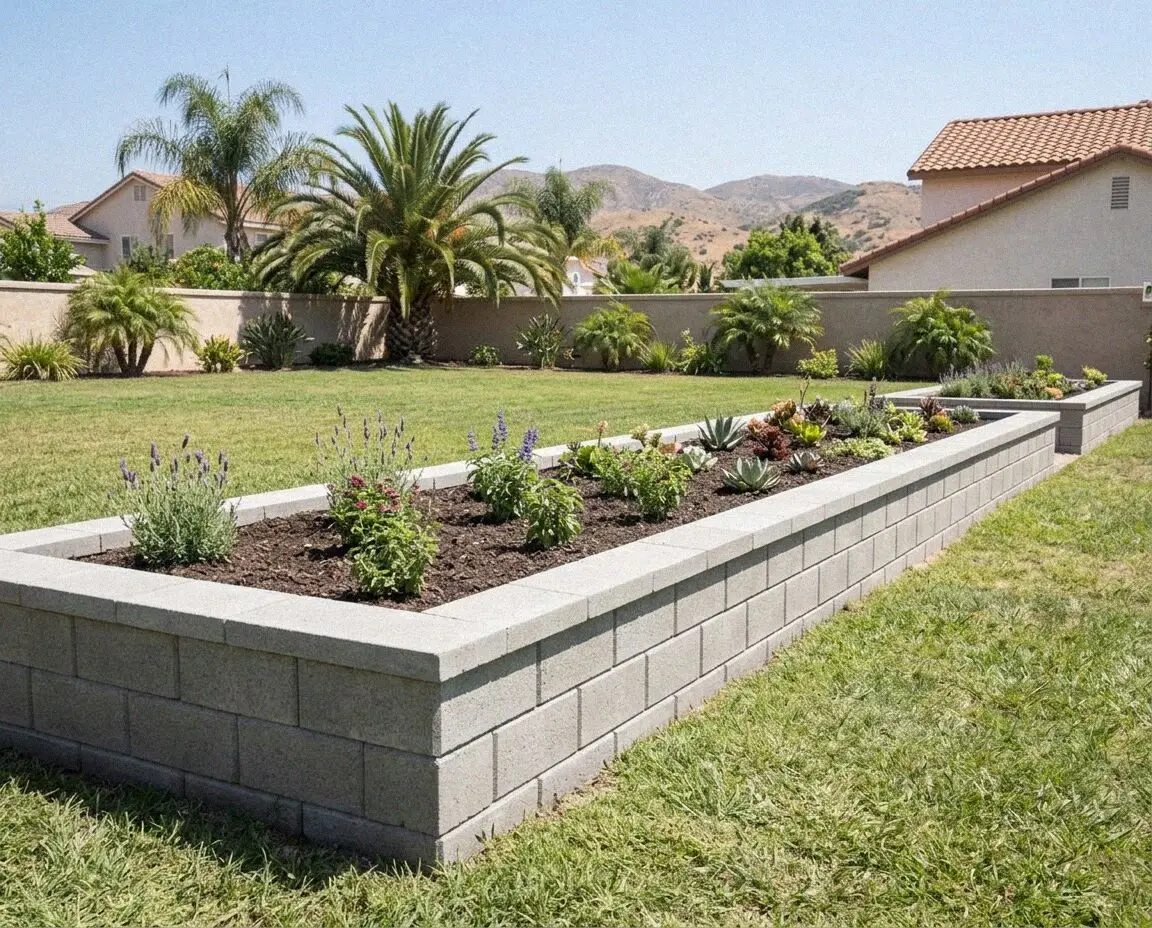
Retaining walls built across Wildrose Ranch must satisfy Riverside County standards whenever grade retention exceeds 4 feet in height. We pour deep footing trenches with continuous steel reinforcement and backfill perforated pipe so hillside drainage avoids pool pads.

Stamped slate concrete patio behind a single family home in Corona

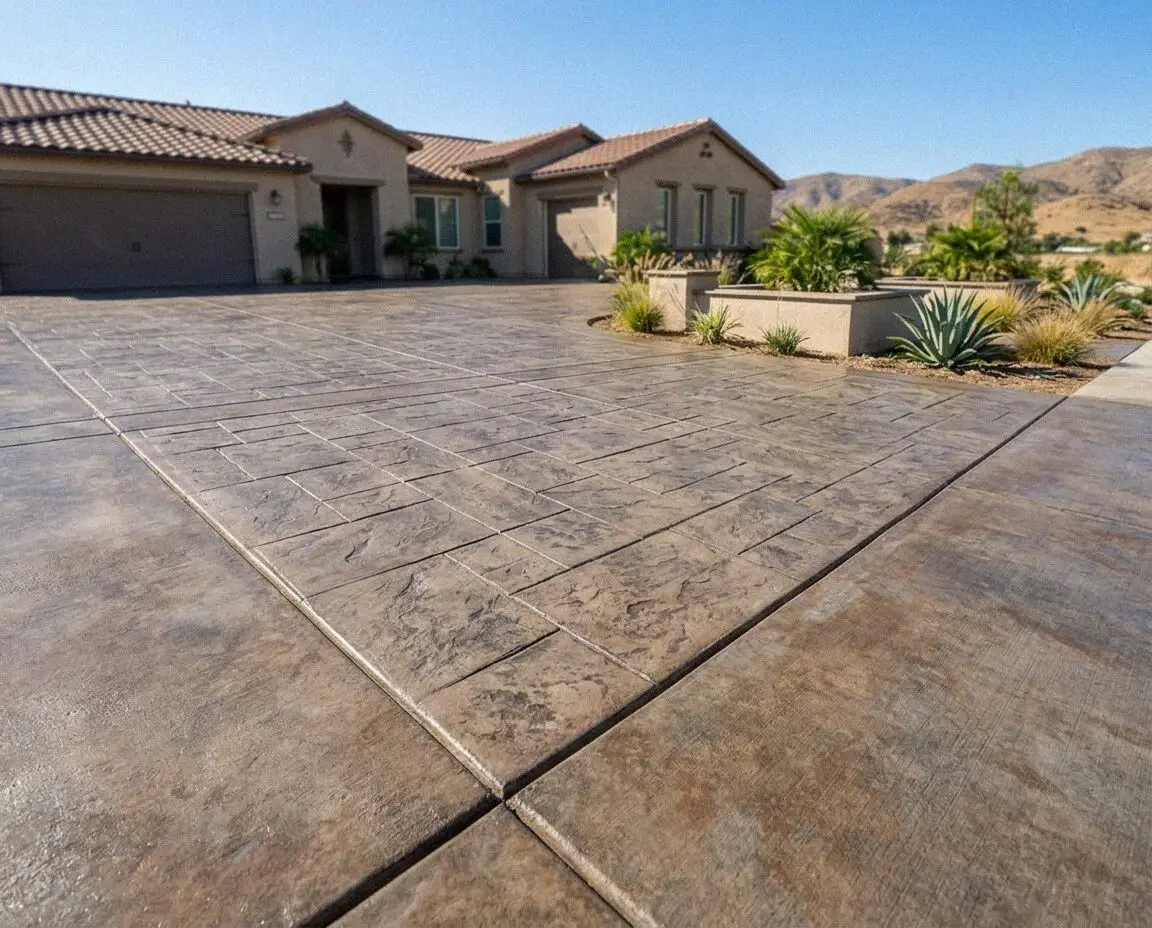
Decorative Concrete

Walkway installations through Trilogy at Glen Ivy link side gates to rear patios across terraced residential lots. Homeowners request smooth 48-inch concrete paths with slip resistant broom finishes that give safe, level footing around landscaped slopes without shifting down.

Poured concrete retaining wall along a residential slope in Corona

Concrete Retaining Walls

RV pad construction along Campbell Ranch Road accommodates heavy toy haulers and travel trailers on deep suburban side yards. We pour 6 inches of dense reinforced concrete over a mechanically tamped gravel base so heavy tandem axles never punch through the slab edges.

Smooth finished concrete floor inside a single family home in Corona

Concrete Floor Installation

Stamped concrete offers Butterfield properties durable textured outdoor living that outperforms shifting pavers and weed prone gravel. Poured monolithic slabs sealed with 2 protective acrylic coats lock out desert dust and hold true alignment across severe canyon droughts.

Show All Concrete Services

The Circle City Corona Concrete crew mid-pour at a home in the Corona area

Temescal Valley Sits in a Natural Basin

Temescal Valley holds a population of 25,411 residents living along the corridor between the Santa Ana Mountains and the Gavilan Hills. The geography channels heavy mountain runoff down through natural washes directly toward Interstate 15. When hillside drainage saturates flat lots in communities like Wildrose Ranch, subgrade soils lose load capacity, requiring deep gravel trenches and positive slope grading on every driveway.

With a density of 507 people per square mile, properties here feature larger residential parcels and wide side yards rarely found in older cities across the Inland Empire. Neighborhoods like Horsethief Canyon Ranch and Sycamore Creek include long access drives and steep backyard terraces. Paving these spaces requires tailored formwork that mirrors the slope of the lot while directing stormwater away from home foundations toward street gutters.

The average household holds 3.6 people in Temescal Valley, creating steady demand for expanded vehicle parking, wide entry paths, and functional backyard patios. Large families often need extra driveway pads for multiple vehicles or recreation gear. We pour reinforced concrete slabs engineered to support parked weight without cracking at the joints, giving homeowners durable utility that handles daily traffic year after year without settling.


How We Sequence Temescal Valley Jobs

Our pouring workflow eliminates structural failure by locking down subgrade compaction, county permits, and deliberate curing intervals before any vehicle or foot traffic touches the slab.

1

Site inspection

Miguel Arreola inspects canyon slopes, checks subsoil firmness, and outlines forms. Every estimate is measured and written on site

2

Preparation first

Crews excavate 6 inches of native clay, place 4 inches of crushed rock, and mechanically compact the base to support heavy loads.

3

Permits and scheduling

Our team files plans directly with Riverside County TLMA for necessary approvals. Homeowners never stand in line at the permit desk.

4

The work and after

Pouring takes 2 days on site. Foot traffic can cross the slab after 24 hours, while passenger trucks must cure for 7 full days.

Book an Onsite Temescal Valley Estimate

Get exact measurements and flatwork specifications tailored to your parcel slope, with pricing delivered within 1 business day so planning your project starts without delay.

Request a Free Estimate

Written on site · No obligation

By submitting, you agree to our disclosure and consent terms, including being contacted by Circle City Corona Concrete.

Reviews

Temescal Valley Homeowner Reviews

Local property owners confirm how our steel reinforcement, base compaction, and clean jobsite standards preserve flatwork across steep canyon lots through seasonal temperature shifts.

Google review

“Our place inside the circle had a driveway that was more patch than concrete. They took out 520 square feet, dug the old fill down to firm ground and poured 5 inches. Miguel re-formed the approach so it meets the curved curb square instead of at an angle.”

Facebook review

“The deck around our pool in Eagle Glen was cracking and too hot to stand on. They poured 610 square feet in a light broom finish, cut the joints on a 10-foot grid and sealed it at 28 days. Two summers on it is flat and we can cross it barefoot at noon.”

Dev P. of CoronaPool deck · Facebook · 2025
BBB review

“Our garage floor up in Corona Hills was dusting and cracked corner to corner. They repoured 460 square feet at 5 inches over a vapor barrier, sawed the joints on a 12-foot grid and sealed it. The HOA submittal was handled before the truck ever turned up.”

Temescal Valley Inquiries Answered Once

Clear answers on county permits, expansive canyon soils, curing timelines, and subgrade preparation help property owners make informed decisions before breaking ground on new pours.

(951) 555-0174
  • What factors determine concrete cost in Temescal Valley?

    Grading requirements on foothill lots and the depth of subgrade excavation dictate the final estimate in Temescal Valley. Hillside parcels near the Santa Ana Mountains require extensive soil removal, imported aggregate rock, and heavier rebar reinforcement to counter expansive clay. Street access for heavy transit-mix trucks across terraced lots also shapes total labor.

  • Do I need a permit from the county for concrete work?

    No permit is required for standard flatwork like rear patios or walkways on private lots. However, the Riverside County Transportation and Land Management Agency requires permits for retaining walls over 4 feet tall and driveway approaches crossing the public right of way. Our team pulls those permits, while the property owner remains responsible for private easements.

  • What makes concrete flatwork last in Temescal Valley?

    Slabs fail when expansive clay dries out and shrinks, leaving unsupported edges that crack under load. We prevent this by excavating native loam and replacing it with 4 inches of crushed rock base compacted with mechanical plates. Slabs are poured at 4 inches of thickness with steel rebar, and control joints are cut every 10 feet to relieve internal drying stress.

  • How does the housing stock in the valley affect pours?

    Master planned tracts built during the early 2000s feature tight side yard setbacks and rear property slopes that restrict skid-steer entry. When machines cannot access the back, crews must pump concrete over rooflines or wheelbarrow mix through side gates. This hand labor represents the largest share of site preparation, making rear access a primary factor on final costs.

  • How long does a typical concrete job take to finish?

    Most residential projects take two to three working days on site from initial grading to final cleanup. Foot traffic can step onto the surface after 24 hours, but cars must stay off for 7 full days. Summer canyon heat above 95 degrees can require early dawn pours, while county permit reviews for steep hillside retaining structures occasionally stretch early lead times.

  • Is concrete work different between valley communities?

    Properties in Sycamore Creek sit on steep foothill grades with rocky subsoil, while older parcels in Butterfield lie on flatter alluvial sand along the canyon wash. Sycamore Creek jobs require engineered terracing, stepped forms, and heavy drainage diversion, whereas Butterfield flatwork demands subbase compaction. Sycamore Creek hillside lots usually cost more to prepare.

Towns Bordering Temescal Valley

Our Corona crew mobilizes equipment across western Riverside County, bringing the same subbase compaction, licensed standards, and written guarantees to residential communities throughout the Inland Empire corridor.

Show All Areas We Serve

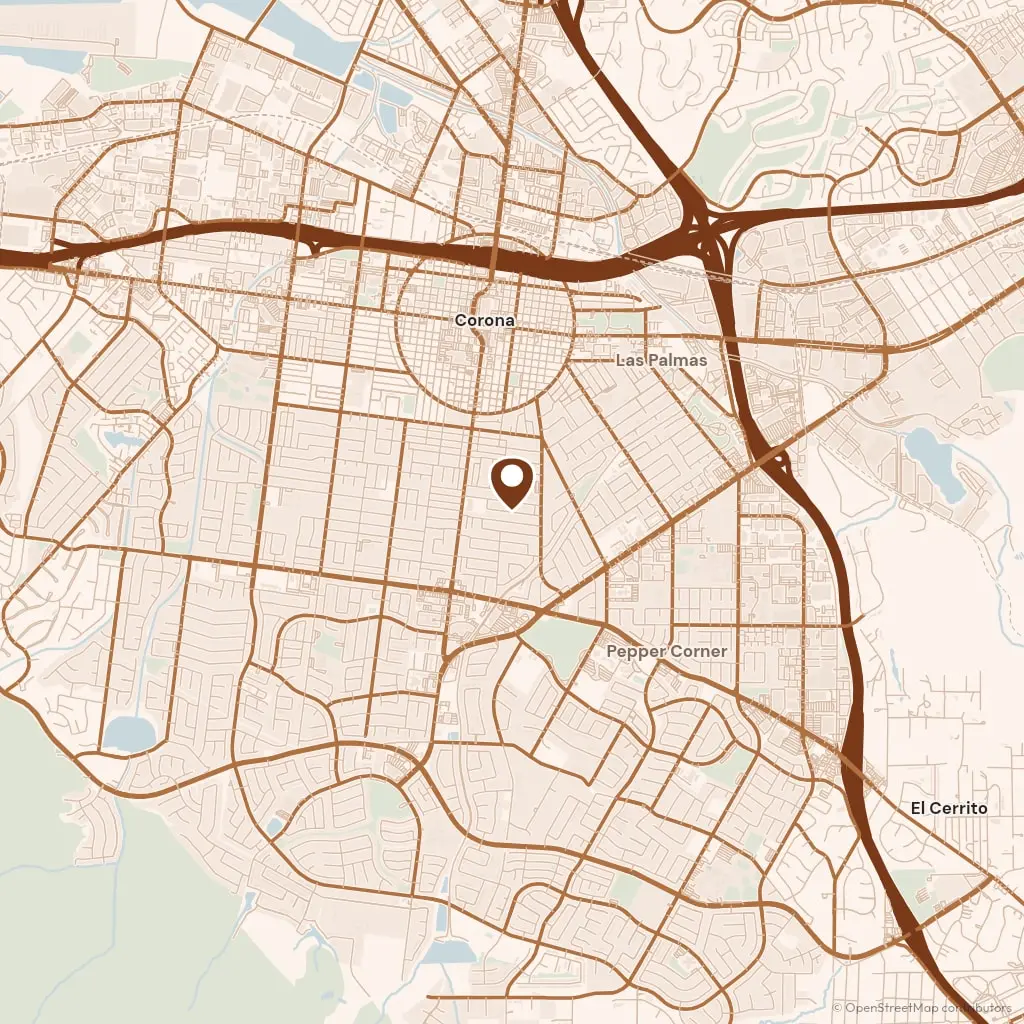
Map showing Circle City Corona Concrete in CoronaOpen the Corona Office in Google Maps
Circle City Corona Concrete

Need Concrete Poured in Temescal Valley?

Reach out today to schedule an onsite visit with Miguel Arreola and secure a written workmanship guarantee against defects in how it was built on your next slab.