Serving Corona, CA and surrounding areas.(951) 555-0174
Circle City Corona Concrete

Garage Floor Concrete in Corona, CA, Anchored Against Footing Settlement

Circle City Corona Concrete replaces garage slabs with steel dowels and vapor barriers to stop shifting on local clay soil. Every estimate is measured and written on site

Google reviewsFacebook reviewsBetter Business Bureau reviews5.0 Stars Rated by our customers · Google, Facebook and the BBB
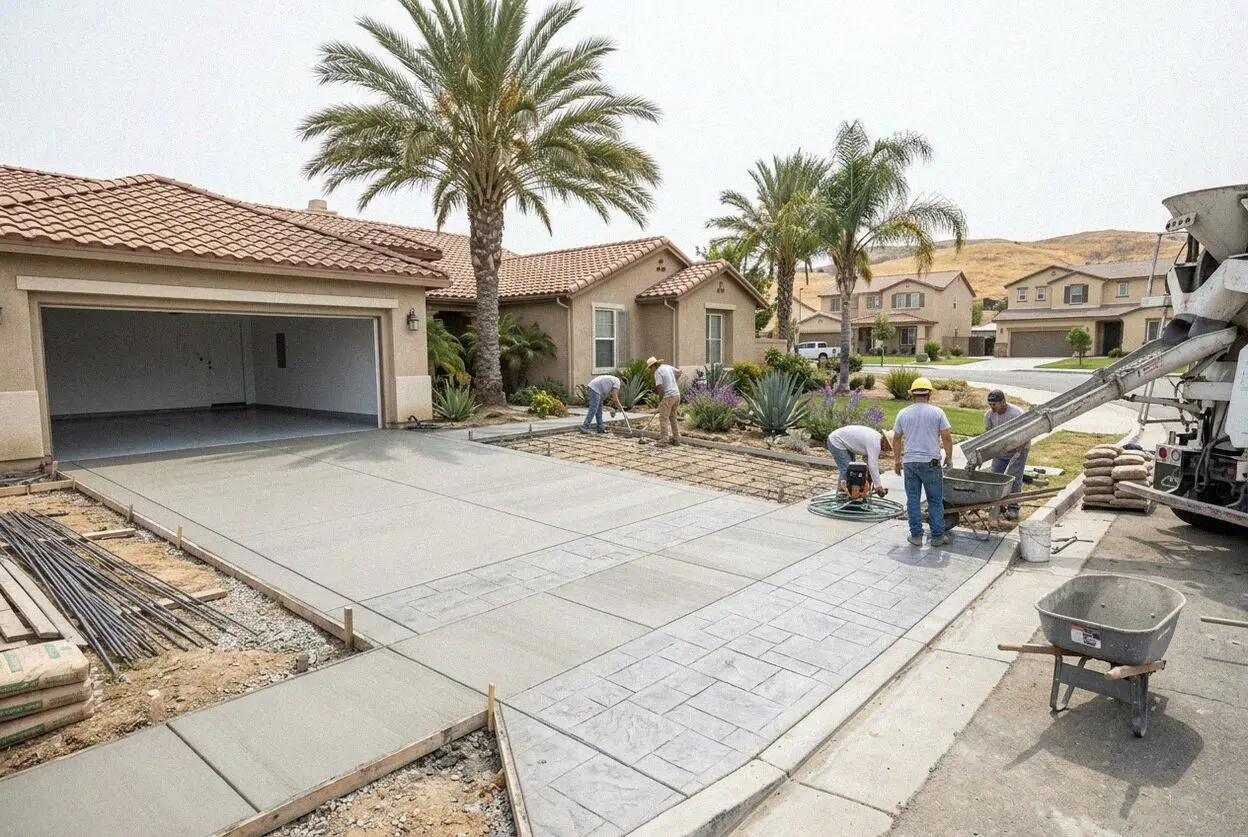
Pouring and leveling a concrete garage floor at a Corona residence
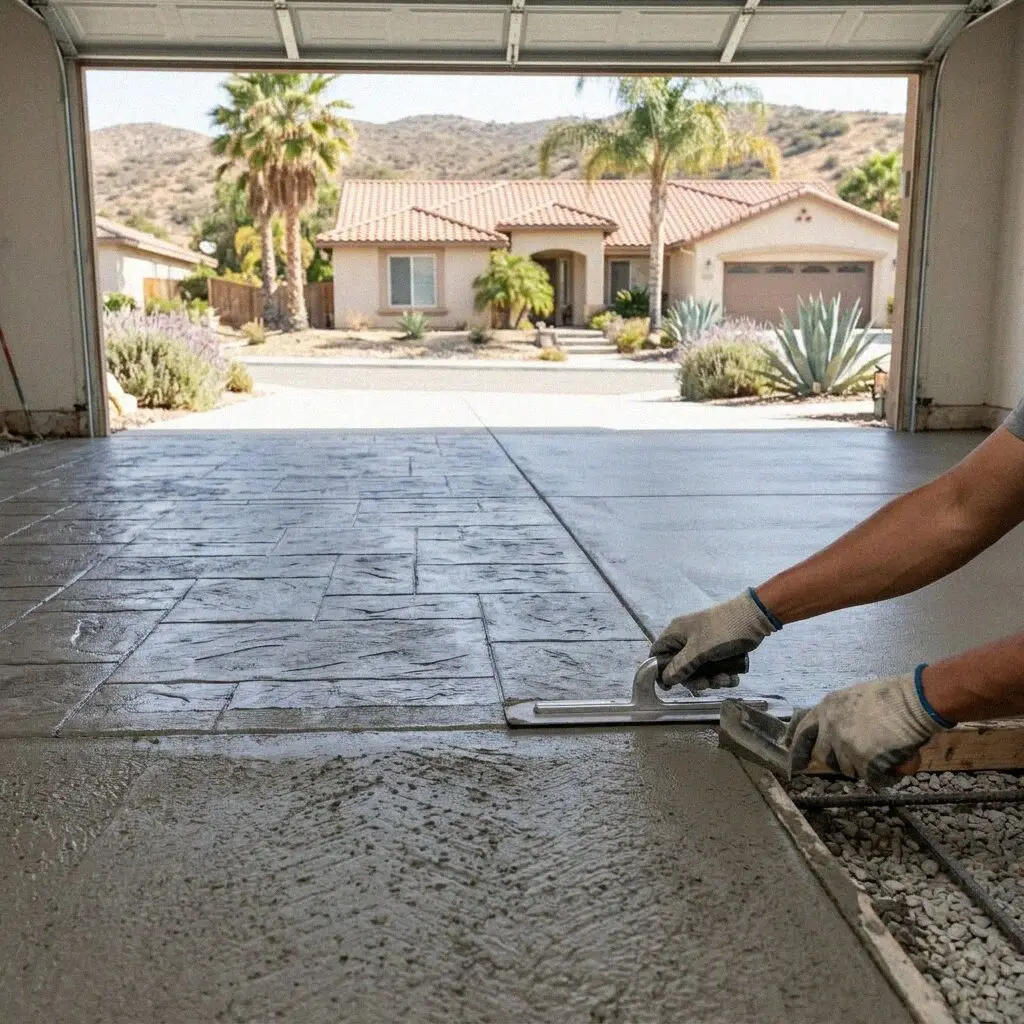
Smooth troweled garage floor slab inside a residential home in Corona

Build Method

Casting Reinforced Garage Floors Across Corona

In Corona, garage floors take concentrated vehicle weight while resting on alluvial soils that expand during wet winters and shrink in dry summers. When an unreinforced slab sits directly on moving subgrade without perimeter isolation, cracking follows the perimeter foundation walls. Miguel Arreola brings 17 years of field experience prior to founding the company in 2019, ensuring every interior slab is engineered with rebar to resist ground heave.

Holding CSLB C-8 licensing and liability insurance on every job, the crew excavates failing concrete and prepares a four inch compacted aggregate base. Subgrade data from the USDA Web Soil Survey shows heavy clay deposits across south Corona, requiring a thick base to drain water away from the slab underside. A continuous 15 mil vapor barrier prevents moisture from sweating up through the concrete surface.

With owner-occupied homes at 64.9% across Corona, homeowners rely on garages for heavy storage and vehicles. Every pour uses 4000 PSI concrete doweled directly into the foundation stem walls with steel pins. This structural tie prevents lateral drift and differential settling across the perimeter. Each completed garage floor is backed by a written workmanship guarantee against defects in how it was built, ensuring long term stability under daily automotive traffic.


Damage Signs

When is a Corona garage floor past repairing?

Spalling and Surface Flaking

Surface pitting begins when moisture gets trapped beneath garage sealants or when hot vehicle tires pull at unsealed cream layers. As cars roll in, tire heat delaminates the weak top layer, exposing rough aggregate that sheds gray dust across the room whenever someone walks inside.

Perimeter Slab Cracking

Homes built in the 1990s across Corona frequently show deep cracks running parallel to stem walls. Expansive foothill clay expands when saturated, lifting the center of the garage floor while perimeter footings stay anchored three feet down, snapping unreinforced concrete.

White Powder on Bare Concrete

White chalky powder looks like simple dust, but it is mineral efflorescence pushed up by water vapor. Without a vapor barrier beneath the concrete, moisture migrates upward continuously, dissolving the paste and turning concrete brittle within eighteen months of first appearance.

Trip Ledges at the Threshold

Uneven vertical drops where the garage floor meets the driveway apron create trip hazards and jar car suspensions. Subgrade settlement causes the slab to sink an inch over twelve months, letting rainwater wash under the foundation and undermining surrounding structural soil.

Slab Package

What Goes Into Every Corona Garage Floor

Every garage floor we pour in Corona is built to isolate vehicle loads from shifting foothill clay, keeping moisture out and preventing settlement cracks before the first tire ever drives onto the surface.

Complete Slab Demolition

Hydraulic breakers break apart failed concrete, which is hauled away to local recycling yards within one working day.

Subgrade Soil Compaction

The exposed clay dirt is plate compacted and tested for soft pockets, with unstable soil removed down to solid ground.

Crushed Rock Base Layer

Four inches of crushed rock base is spread and mechanically vibrated to create a solid drainage bed under the slab.

Vapor Retarder Barrier

A puncture resistant 15 mil vapor barrier is taped across the entire footprint to stop ground water rising upward.

Perimeter Steel Dowels

Half inch steel rebar pins are drilled and epoxied into the foundation stem wall every 24 inches along the perimeter.

Steel Rebar Grid Mat

Number 4 grade 60 steel rebar is tied on twelve inch centers and elevated on plastic chairs to sit inside the pour.

Site Clean and Washdown

Forms are stripped, thresholds are detailed, and surrounding flatwork is power washed clear before crew signoff.

Workmanship Guarantee

Every finished floor is backed by a written workmanship guarantee against defects in how it was built for your property records.

Surface Review

Corona Garage Floor Options, Compared

Selecting the right garage floor build balances vehicle loads, surface wear from hot tires, and defense against subgrade moisture movement across different residential neighborhoods in Corona.

OptionLifespanProperty FitMaintenanceInstall Time
Standard Broom Finish30 to 40 years of serviceStandard two car suburban garageOccasional sweep and hose rinse3 to 4 working days
Sealed Smooth Trowel35 to 45 years of serviceHigh traffic workshop or gym bayPenetrating reseal every 5 years4 to 5 working days
Steel Grid Slab40+ years of active serviceOlder ranch homes on shifting dirtJoint resealing every 7 years4 to 5 working days
Pumped Structural Slab30 to 40 years of serviceHillside lots with narrow pathsSurface pressure wash every 3 years3 to 4 working days

We inspect your existing slab elevation and soil grade during our visit to recommend the correct reinforcement and finish method for your space.

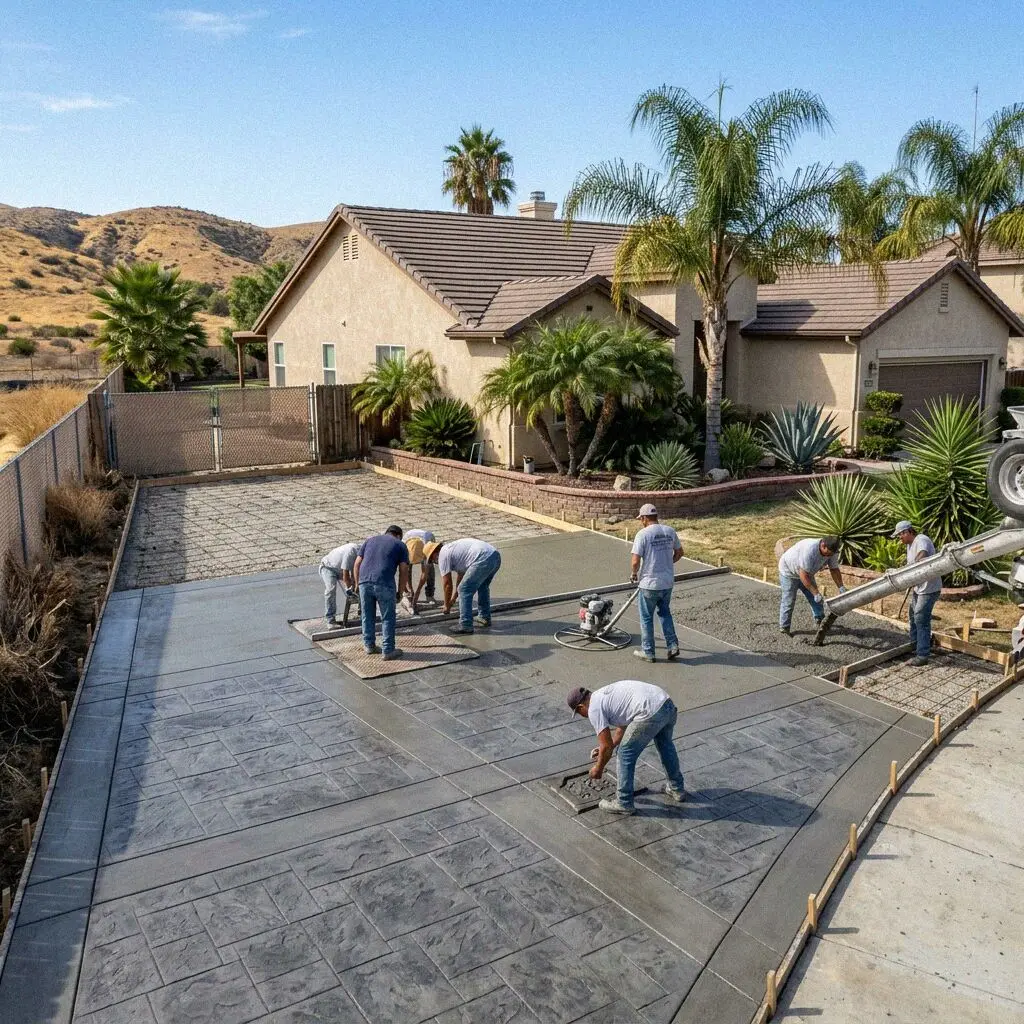
Reinforced garage slab installation at a residential property in Corona

Regional Soils

Why Corona Garages Require Anchored Slabs

Corona garage slabs must endure summer heat reaching 100 degrees and expansive clay soils that shift up to 2 inches between wet winters and dry summer months.

Across Riverside County, residential developments in the foothills face significant subsurface movement. Corona holds a population of 167,836 residents where multi vehicle garages serve as essential hubs for trucks and commuter vehicles. When expansive clay beneath an interior slab absorbs seasonal rainfall, it swells upward. Without a four inch compacted crushed rock base and rebar grid, that upward force snaps the concrete along the perimeter foundation line.

With an average household of 3.85 people, local garages see heavy daily traffic from large sport utility vehicles and work gear. Guidelines from the Portland Cement Association stress that interior slabs bearing heavy live loads require controlled isolation joints and continuous vapor retarders. We pin perimeter rebar into the surrounding stem walls so the floor moves as an integrated unit, stopping slab separation across Corona properties.

Pour Sequence

Five Steps to a New Corona Garage Slab

Our systematic replacement schedule removes broken concrete, reinforces underlying soil, and finishes the new floor with exact pitch, ensuring zero standing moisture and decades of heavy duty use.

1

Site Measure and Assessment

We inspect the existing garage slab, check foundation stem walls for movement, and take elevation measurements across the floor.

2

Finishes and Permitting

You select your finish texture, we submit plans to the Corona Building Division, and our office schedules your exact start date.

3

Demolition and Subgrade Prep

Old concrete is broken out and hauled to recycling, then exposed clay is compacted and backfilled with four inches of rock.

4

Forming, Doweling, and Pour

The vapor barrier and rebar are secured, stem walls are doweled, and Miguel Arreola oversees the 4000 PSI concrete pour.

5

Final Trowel and Walkthrough

We power trowel the surface, clean the perimeter work area, complete a walkthrough with you, and hand over your guarantee.

Project Costs

What Shapes Your Corona Garage Floor Estimate

Garage floor pricing in Corona reflects structural requirements rather than guesswork, accounting for square footage, subgrade soil instability, structural tie in needs, and the specific finish you select.

Two Car Suburban Garages

Standard single family layouts require standard demolition, four inches of rock base, and rebar reinforcement over stable subgrade.

Attached Townhome Slabs

Shared party walls demand careful saw cutting and vibration control so demolition does not damage adjacent residential structures.

Hillside Foothill Access

Steep driveways and narrow side yards require concrete pumping equipment and hand wheeling, which adds staging and cleanup time.

Dense Polyaspartic Coats

Surface treatments require moisture vapor testing and diamond grinding evaluated on site to confirm concrete slab readiness.

Subgrade soil conditions and threshold elevations vary across Corona neighborhoods. Every estimate is measured and written on site (951) 555-0174 or send us a message.

Schedule Your Onsite Corona Garage Measure

Book an on site inspection to assess your garage subgrade, foundation stem wall doweling needs, and slab thickness, backed by a clear written proposal from Circle City Corona Concrete without sales pressure.

Request a Free Estimate

Written on site · No obligation

By submitting, you agree to our disclosure and consent terms, including being contacted by Circle City Corona Concrete.

Client Words

Local Corona Homeowners on Our Garage Slabs

Read how our reinforced garage floor installations perform under daily vehicle parking and storage across residential neighborhoods in Corona.

Google review

“Our 1990s two car garage floor had sunk three inches near the door. The crew broke out the old concrete, compacted four inches of crushed rock, and poured a smooth new slab doweled into the stem wall. Three months later, there is not a hairline crack anywhere.”

D. Martinez, CoronaGarage Floor Concrete · Google · 2025
Google review

“Getting equipment up our steep hillside driveway looked tricky, but they pumped 450 square feet of concrete without touching the landscape. The team completed the entire removal and repour in four days flat, leaving the garage floor completely level and clean.”

J. Okafor, CoronaGarage Floor Concrete · Google · 2026
Facebook review

“The final walkthrough was thorough and detailed. When I phoned two weeks later with a question about sealing the concrete joints, they returned my call that afternoon and came by to inspect the curing. Their written guarantee gave us total confidence in the work.”

S. Whitfield, CoronaGarage Floor Concrete · Facebook · 2026

Buyer Inquiries

Garage Floor Questions Answered in Corona

Clear answers on engineering specifications, curing timelines, municipal permits, and structural guarantees for your Corona garage slab replacement.

(951) 555-0174
  • What determines garage floor cost in Corona?

    Slab size, subgrade condition, and site accessibility drive the total estimate. Removing broken concrete from unreinforced bays requires hydraulic breakers and disposal runs, while unstable foothill clay demands extra crushed rock base compaction. Structural doweling into foundation walls and selecting smooth hard troweled finishes also shape the overall investment.

  • What is the typical timeline for a garage slab pour?

    A typical two car garage floor replacement takes 3 to 4 working days from tear out to finish trowel. Deep clay excavation or narrow access can extend prep by one day. You can walk on the surface after 24 hours of curing, but heavy vehicles must stay off the fresh concrete for 7 full days so the slab achieves proper compressive strength before bearing wheel loads.

  • What features are included in a Corona garage slab?

    The project scope covers demolition of the existing slab, base rock compaction, vapor barrier installation, perimeter steel doweling, and 4000 PSI concrete pouring. Subgrade compaction testing and perimeter stem wall isolation expansion joints are included as standard line items on your estimate, so you never encounter surprise extra charges during construction.

  • When is a city permit required for an interior floor?

    Interior garage floor replacements generally do not require a building permit when replacing an interior slab on grade without altering footings. However, when foundation stem walls require retrofitting or work extends to the driveway approach, the Corona Building Division requires a permit, which our office pulls directly for you.

  • Which season provides optimal conditions for indoor pours?

    Fall and early spring offer ideal weather conditions for pouring interior concrete slabs in Corona. Moderate temperatures between 65 and 75 degrees allow concrete to cure steadily without flash drying. Pouring during extreme summer heat waves above 95 degrees requires curing blankets and misting to prevent moisture loss, adding days to the active finishing schedule.

  • What coverage does your workmanship warranty provide?

    Every floor comes backed by a written workmanship guarantee against defects in how it was built. Ready mix concrete suppliers provide product performance warranties covering compressive strength. Neither covers superficial hairline shrinkage or extreme tectonic ground movement, because honest protection outlines clear structural standards while standing behind exact workmanship and proper dowel placement.

  • Which concrete mix and vapor barrier brands do you place?

    We pour 4000 PSI commercial grade concrete delivered fresh from certified regional batch plants. Slabs incorporate grade 60 steel rebar, heavy duty 15 mil Stego vapor barriers, and expansion foam. For awkward residential lots, our crews operate hydraulic line pumps and power trowels to place and finish concrete uniformly across the entire interior room.

  • Must the homeowner stay present during the concrete pour?

    No, you do not need to remain on site while our crew works on your garage floor. We only require clear access to the garage bay, driveway, and an exterior water hookup before we start. Vehicles should be parked on the street prior to arrival. If questions arise during the pour, Miguel Arreola is on site or reachable directly by phone to discuss your project.

Service Towns

Serving Corona and Nearby Inland Communities

Based in Corona, our concrete crew replaces failed garage floors across the Inland Empire, engineering every slab to withstand regional soil movement.

Show All Areas We Serve

Replace Your Corona Garage Slab With Confidence

Contact us to schedule a site measure for your garage floor. We evaluate subgrade soil conditions and stem wall tie in points, returning all inquiries within 1 business day with a detailed written estimate.