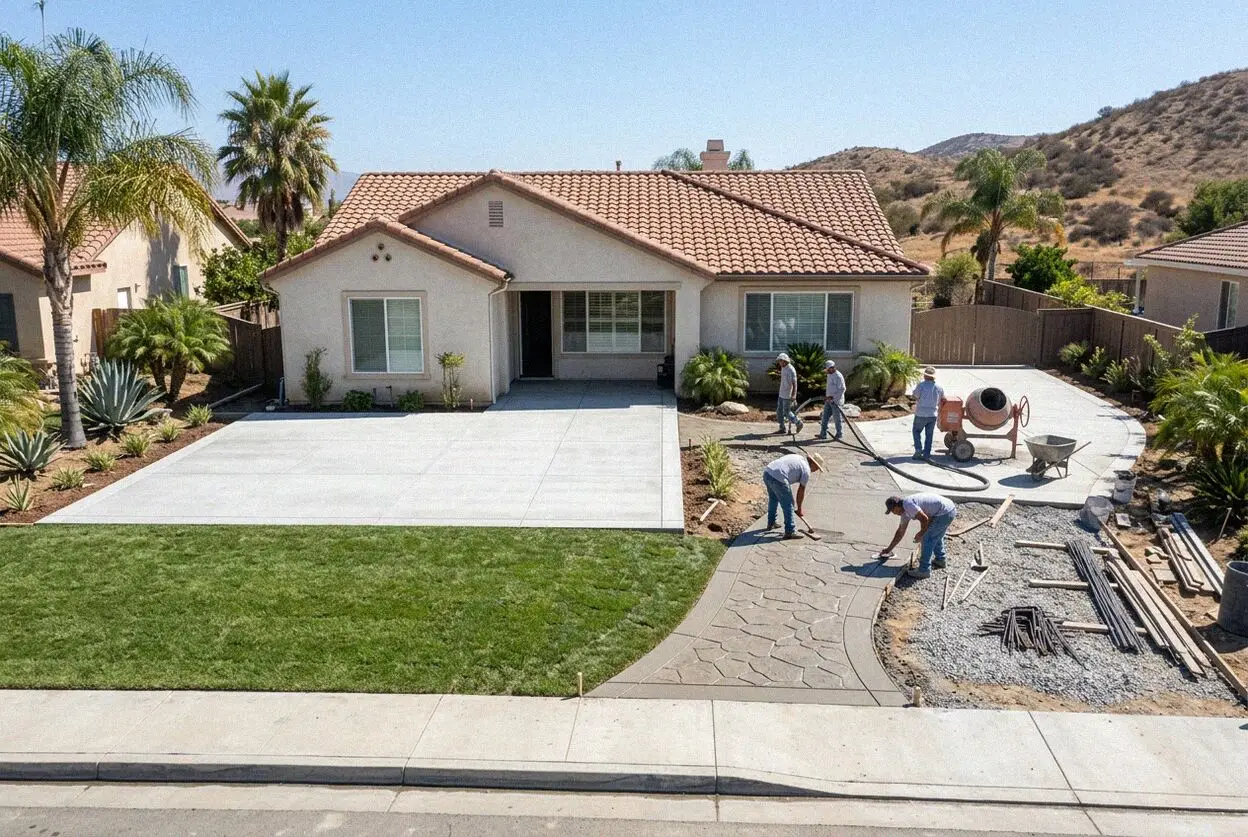
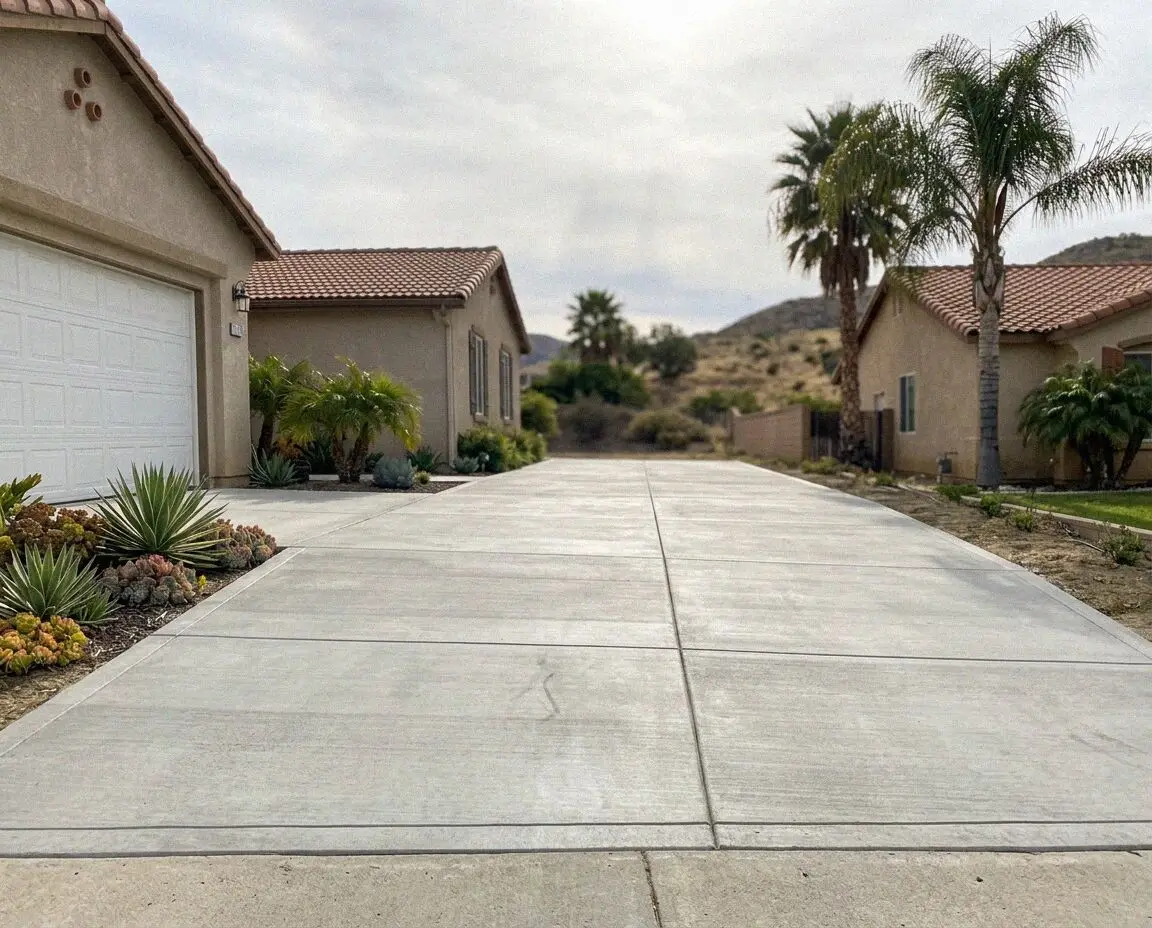
Corona backyards sit on alluvial fan deposits and dense clays that expand during winter rains and contract when summer temperatures cross 100 degrees. When a slab is poured straight onto native soil without adequate excavation, ground movement pushes the concrete upward against house foundations and pulls apart unsealed seams. USDA Web Soil Survey records show heavy clay soils dominating local parcels across south Corona foothill neighborhoods.
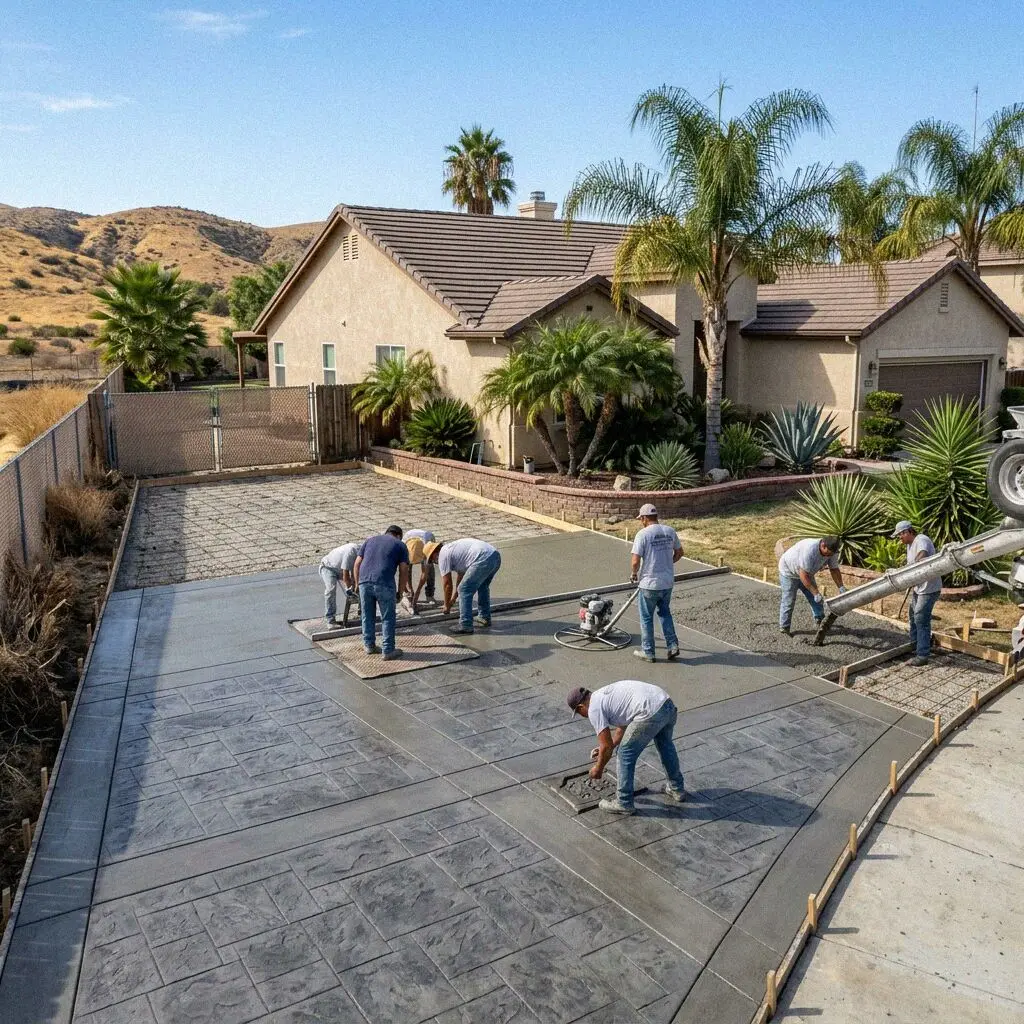
Miguel Arreola spent 17 years pouring flatwork across the Inland Empire before starting Circle City Corona Concrete in 2019. That field background established our structural benchmark for outdoor living areas throughout Riverside County. Every patio begins with four inches of mechanical excavation to remove unstable topsoil, followed by four inches of crushed aggregate base compacted with plate tampers to create an unyielding foundation.
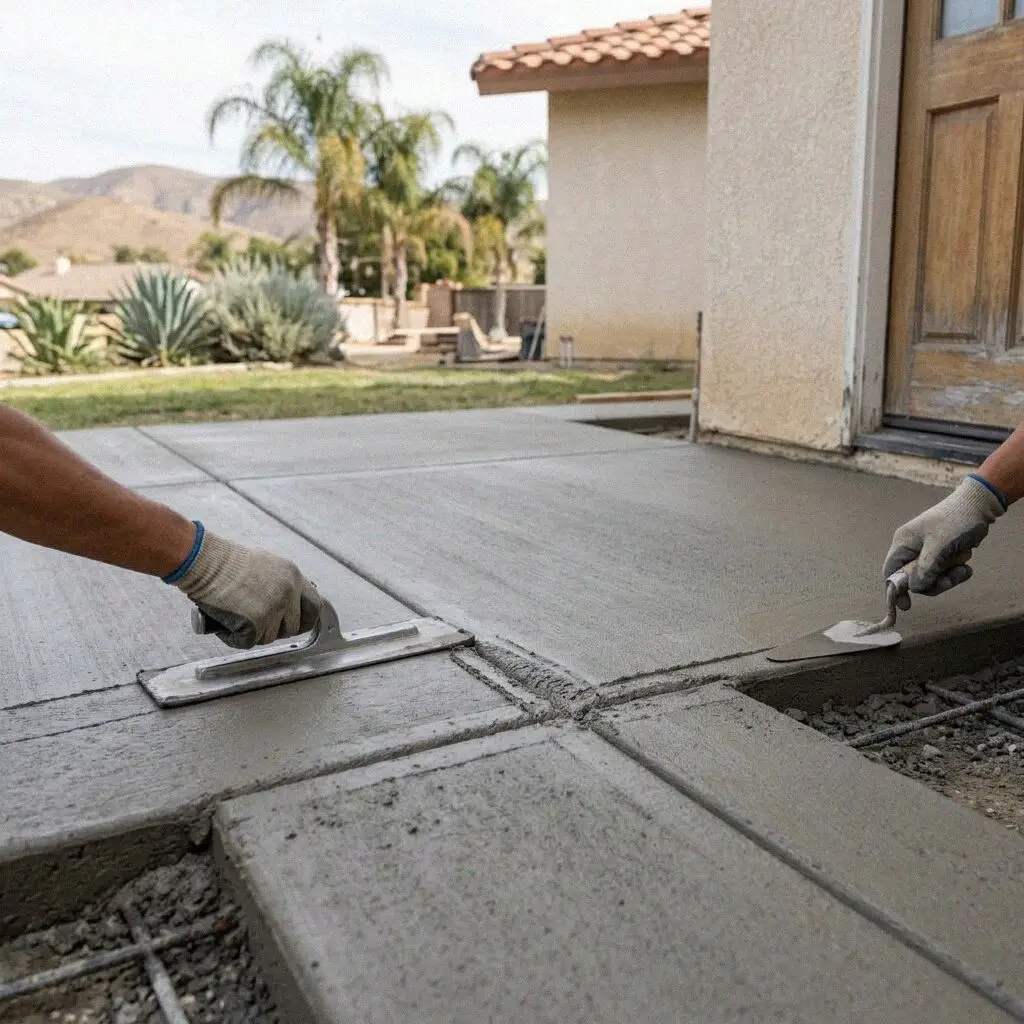
Operating under a CSLB C-8 license with liability insurance on every job, our crews install steel rebar grids tied on eighteen-inch centers across the whole footprint. Steel keeps sections from separating when foothill soil swells beneath the pad. We place flexible expansion strips against home foundations, ensuring seasonal ground movement never transfers pressure into exterior stucco.