Serving Corona, CA and surrounding areas.(951) 555-0174
Circle City Corona Concrete

Concrete Parking Lot Building in Corona, CA for Heavy Logistics Fleet Yards

Circle City Corona Concrete pours 6 inch parking slabs over crushed rock to stop joint faulting on Corona clay. Every estimate is measured and written on site

Google reviewsFacebook reviewsBetter Business Bureau reviews5.0 Stars Rated by our customers · Google, Facebook and the BBB
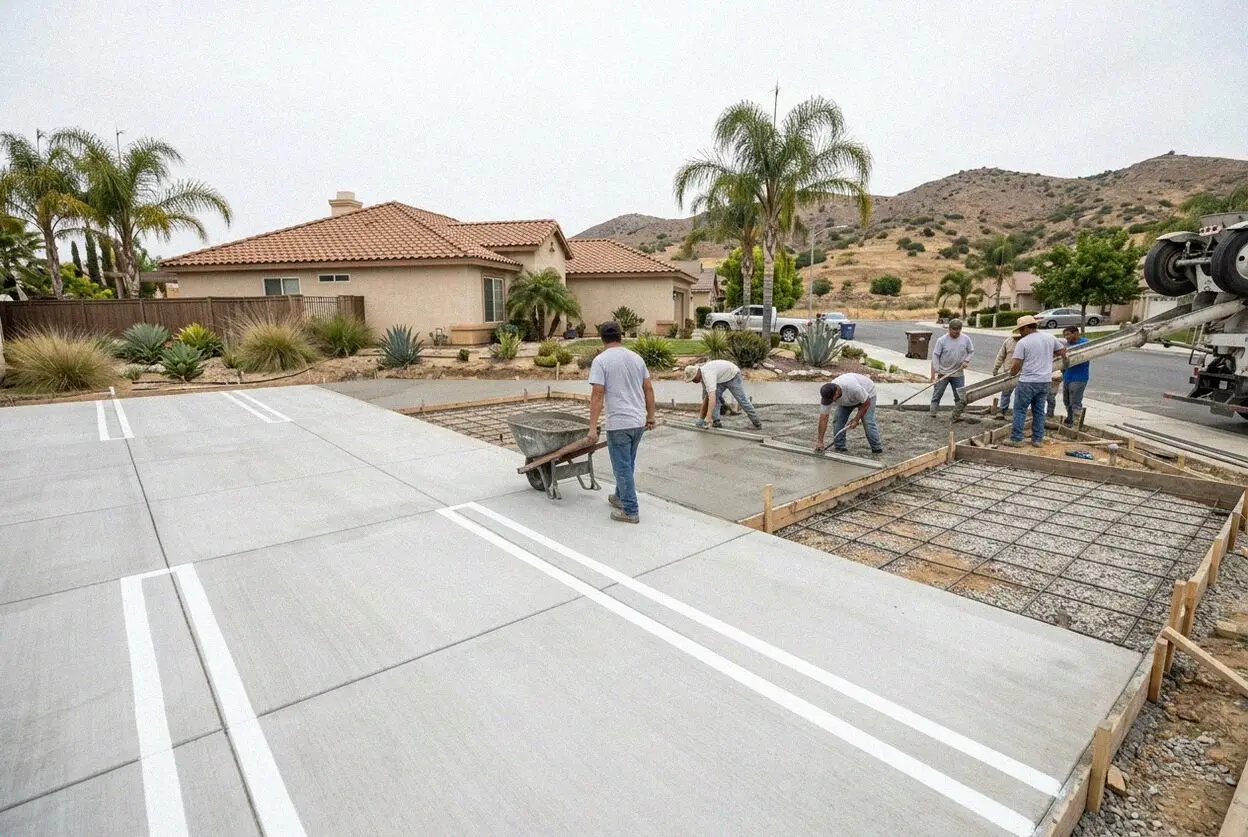
Pouring a reinforced commercial concrete parking lot slab in Corona
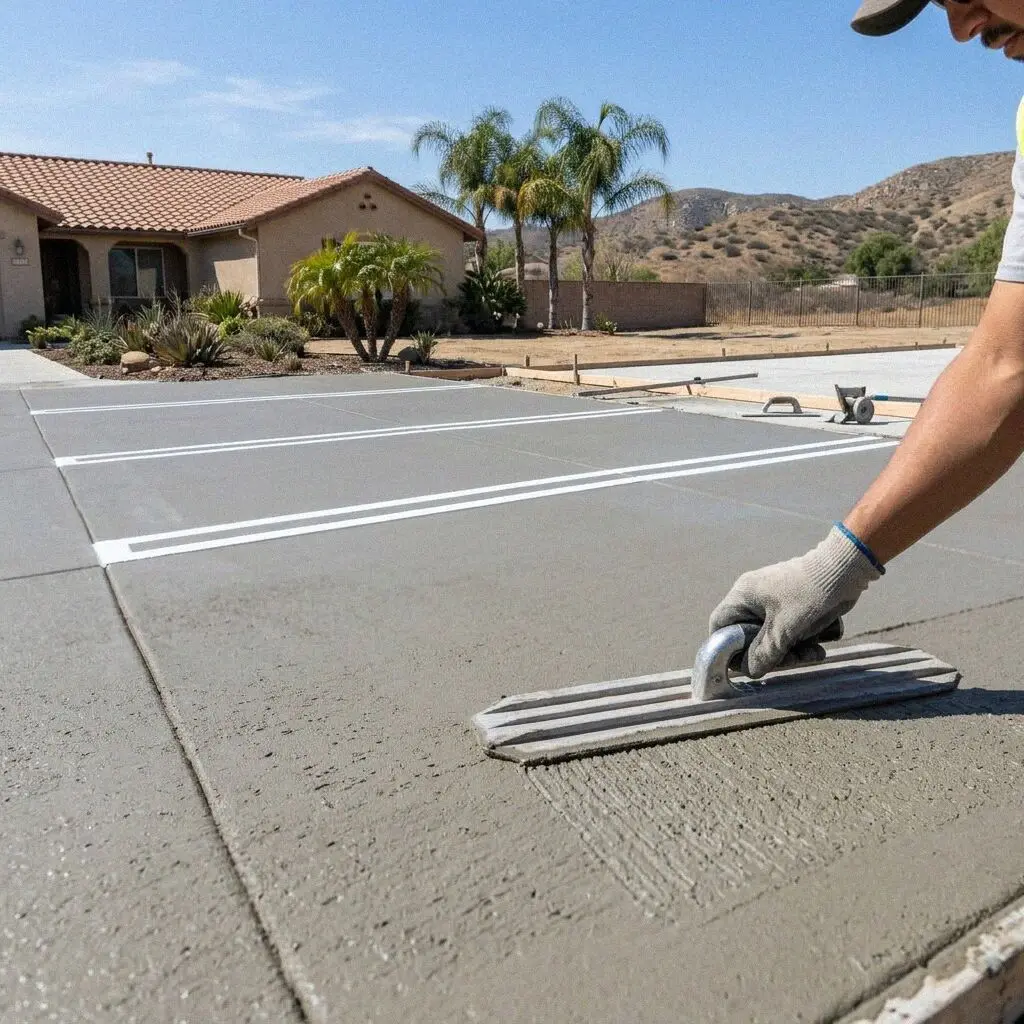
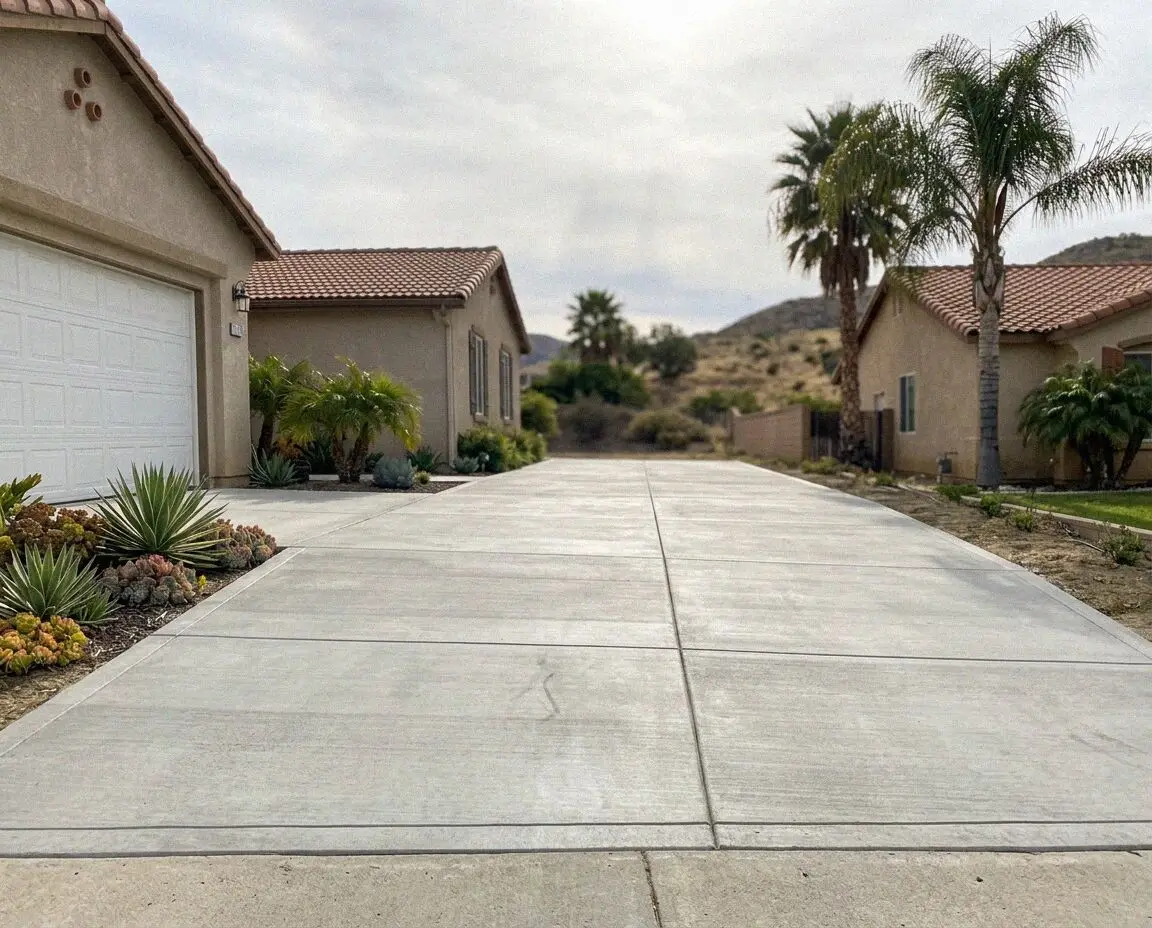
Finished commercial concrete parking lot pavement on a Corona property

Build Standards

Pouring a Commercial Parking Lot in Corona

Corona commercial properties face intense subgrade movement because local soils hold heavy alluvial clay. Data from the USDA Web Soil Survey shows high shrink swell potential across Riverside County valley floors. When freight haulers turn loaded trailers over unreinforced asphalt or thin concrete, the shifting subgrade causes slab faulting and edge cracking. We pour 6 inch sections designed to distribute axle weights evenly across changing soil moisture.

Our founder Miguel Arreola brought 17 years of field experience in structural concrete before establishing Circle City Corona Concrete in 2019. That background directs how we prepare every subbase in the city. We excavate native soil down to stable ground, compact the subgrade, and install 4 inches of crushed aggregate base. We set steel reinforcement chairs so rebar stays suspended in the middle third of the pour, preventing bottom tensile failure under heavy wheel loads.

Summer temperatures in the Inland Empire routinely exceed 100 degrees, creating rapid surface evaporation that threatens unsealed commercial slabs. According to guidelines from the Portland Cement Association, high evaporation rates demand immediate curing compounds and properly timed joint saw cuts. We cut control joints at 12 foot intervals within 12 hours of pouring, relieving internal shrinkage tension before random cracks can form.

Damage Signs

When is a Corona parking lot past surface patching?

Standing Water in Drive Lanes

Depressions form where heavy truck tires compress wet subgrade, trapping water in the drive aisles. When standing water penetrates hairline surface fractures, it softens the underlying aggregate. Repeated axle loads on the softened subgrade soon cause full slab collapse.

Subgrade Slab Faulting

Expansive clay across Corona swells during winter storms and shrinks in dry summer heat exceeding 100 degrees. Without doweled joints or deep aggregate base, individual slabs heave unevenly. Slabs that shift more than one half inch out of alignment will snap under traffic.

Surface Map Cracking

Fine spiderweb fissures look like harmless surface blemishes, but they reveal rapid moisture loss during the initial pour. Corona wind and heat pull water from the top layer before cement hydration finishes. Unsealed microcracks widen over two seasons into deep spalling.

Joint Spalling and Trip Edges

Broken joint edges create immediate pedestrian hazards and vehicle tire hazards across commercial stalls. Delaying replacement lets heavy delivery trucks grind exposed aggregate into loose rubble. The damaged zone spreads across adjoining slabs over three to six months.

Standard Spec

What Goes Into Every Corona Parking Lot We Pour

Every commercial concrete lot we cast in Corona is built to sustain continuous commercial fleet traffic without settling, joint breakdown, or moisture failure across decades of harsh inland weather.

Old Pavement Demolition

We break out old cracked asphalt or failed slabs and haul all demolition rubble off site to licensed recycling centers.

Subgrade Compaction Proof

We proof roll the exposed subgrade with heavy rollers, excavating and rebuilding any soft clay pockets that yield.

Crushed Aggregate Subbase

We spread 4 inches of crushed aggregate base rock and compact it to 95 percent relative density before setting forms.

Commercial Concrete Mix

We place 4,000 PSI concrete mixed specifically for commercial traffic, with optional higher strength mixes available.

Sawed Contraction Joints

We cut control joints at precise 12 foot intervals within hours of finishing, controlling stress before cracks form.

Steel Load Transfer Dowels

We place smooth steel dowels at construction joints so heavy wheel loads transfer between slabs without edge faulting.

Site Cleaning and Striping

We clear forms, wash adjoining surfaces, sweep the surrounding ground clean, and prepare stalls for crisp layout lines.

Workmanship Guarantee

Every installation includes a written workmanship guarantee against defects in how it was built to protect your capital investment.

Pavement Specs

Corona Commercial Paving Materials Compared

Choosing the right pavement build determines long term maintenance overhead, surface life under heavy commercial truck traffic, and how well the lot resists Inland Empire summer heat and expansive clay ground movement.

OptionExpected LifeProperty FitMaintenanceCure Timeline
Standard Concrete30 to 40 yearsIndustrial parks and retail lotsJoint sealing every 5 years7 days to full traffic
Heavy Duty Slabs40 to 50 yearsLogistics yards with heavy semi trucksJoint sealing every 7 years10 days to full traffic
Hot Mix Asphalt15 to 20 years with baseOlder light commercial parking baysSealcoating every 3 years3 days to full traffic
Permeable Pavers20 to 25 yearsTight urban parcels with storm runoff limitsJoint vacuuming every 2 years2 days to full traffic

Our on site evaluation checks your subgrade condition and fleet traffic volume to specify the exact slab thickness and base depth for your facility.

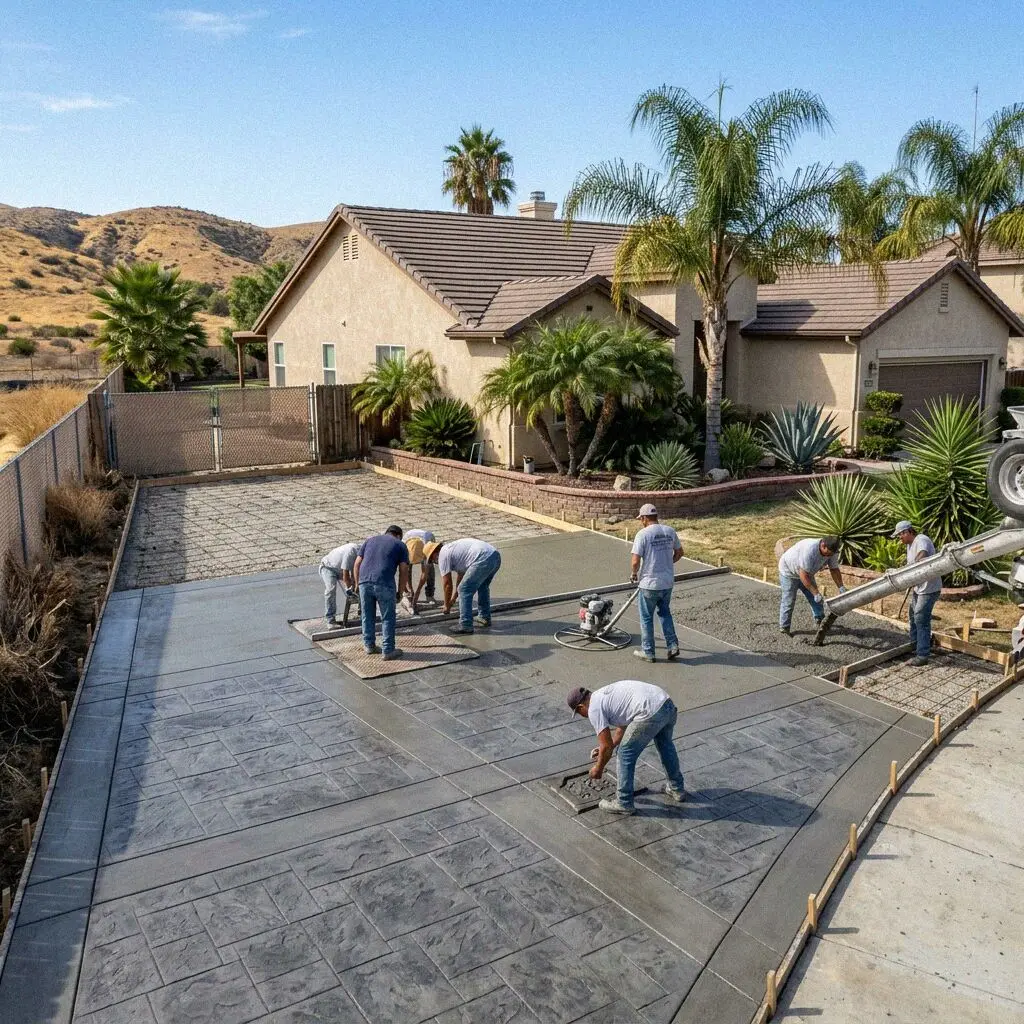
Heavy commercial concrete parking lot under construction in Corona

Local Ground

Why Corona Logistics Yards Demand Heavier Slabs

Corona parking lots face summer temperatures topping 100 degrees and subgrade soils with clay plasticity indexes above 25, demanding rigid pavement design.

With a population of 167,836 and dense commercial corridors flanking the 91 freeway and Interstate 15, Corona serves as a primary distribution hub in the Inland Empire. The resulting volume of commercial truck traffic delivers continuous punishing axle loads across facility pavements. Asphalt lots deform into deep wheel ruts within a few seasons under this constant weight, whereas our 6 inch reinforced concrete pavement slabs bridge weak subgrade areas without rutting.

Across Riverside County, seasonal rain saturated clay expands dramatically before drying into brittle soil under relentless sun. When unreinforced pavement rests on this fluctuating base, edges break away and joint seals shear apart. We install thick crushed aggregate bases compacted across every square foot, isolating the concrete from active soil heave. Combined with doweled construction joints, this build keeps parking bays level and prevents expensive tear outs.


Project Steps

How Our Corona Parking Lot Crew Runs the Job

From initial soil evaluation to the final stall striping walkthrough, our construction workflow guarantees that every square yard of concrete meets exact commercial load specifications.

1

Site and Soil Inspection

We measure site elevations, inspect soil density, and evaluate fleet turning paths. Every estimate is measured and written on site

2

Permitting and Scheduling

You select concrete thickness and finishes, our office files permits with the Corona Building Division, and we schedule pouring dates.

3

Demolition and Subgrade Proof

Day one removes failed pavement to local recyclers, tests subgrade stability under proof rolling, and replaces yielding wet clay pockets.

4

Base Compaction and Pouring

We compact 4 inches of base stone, position rebar chairs, and place 4,000 PSI concrete under direct supervision by our licensed crew leads.

5

Joint Sawing and Handover

We cut control joints within 12 hours, sweep the pavement clear, walk the stalls with you, and hand over your signed guarantee documents.

Estimate Factors

What Determines Your Corona Parking Lot Pricing

Transparent commercial concrete pricing depends entirely on physical property conditions, total pavement square footage, subgrade stability, and the specific vehicle axle loads your facility handles daily.

Standard Commercial Lots

Basic retail parking stalls require standard 5 inch slab depth over 4 inches of base rock, moving costs mainly by total square footage.

Heavy Truck Loading Bays

Freight docks handling loaded tractor trailers require 6 inch or 8 inch reinforced slabs with heavy subgrade stabilization across soft clay.

Awkward Slopes and Drainage

Sites requiring precise grading, catch basins, curb transitions, or retaining walls add formation time and specialized elevation checks.

High Strength Concrete Mixes

Engineered mixes with chemical curing agents, fiber additives, or 5,000 PSI requirements must be determined during the on site assessment.

Because subgrade clay conditions and truck load requirements differ across Corona, Every estimate is measured and written on site (951) 555-0174 or send us a message.

Schedule Your On Site Parking Lot Estimate

Get an accurate, detailed project scope tailored to your facility truck traffic, existing subgrade stability, and local Corona building codes with no guesswork or hidden construction line items.

Request a Free Estimate

Written on site · No obligation

By submitting, you agree to our disclosure and consent terms, including being contacted by Circle City Corona Concrete.

Client Reviews

Corona Property Owners on Our Concrete Lots

Local commercial property managers and facility operators share their experience working with our crew on industrial slab pours, drainage corrections, and parking replacements.

Google review

“Our retail center parking bays on Sixth Street had major asphalt rutting and pooling water. The crew excavated 12,000 square feet, poured 6 inch reinforced slabs, and finished the entire job in 4 days. Heavy delivery trucks now park without causing any cracks or joint depression.”

Marcus R., CoronaCommercial Concrete Lot · Google · 2025
Google review

“We needed a reinforced loading apron for three semi freight docks behind our industrial warehouse. Access was tight along the rear alley, but they graded the subbase and poured 8 inch doweled concrete over 3 working days. The transition joints remain completely flush under full axle loads.”

David T., CoronaIndustrial Loading Apron · Google · 2026
Facebook review

“After the pour was completed on our commercial yard, the crew walked the entire 8,000 square foot slab with us to inspect the saw cuts. When we requested an extra drainage check two weeks later, they returned the next morning. It is rare to see contractors stand behind their written word.”

Elena S., CoronaParking Lot Replacement · Facebook · 2026

Paving FAQ

Commercial Parking Lot Questions in Corona

Straightforward answers to the practical planning, engineering, permitting, and durability questions facility managers ask before pouring commercial concrete.

(951) 555-0174
  • What determines the cost of a Corona concrete lot?

    Pricing is determined by square footage, slab thickness, subgrade soil stabilization needs, and demolition requirements rather than flat rates. Commercial lots carrying freight trucks require 6 inch or 8 inch sections over compacted aggregate, while retail parking requires 5 inches. Demolition of old asphalt, grading for stormwater flow, and doweled joints also shape the final investment.

  • How long does commercial lot construction take?

    A standard commercial lot pour takes between 3 and 7 working days on site. Complex access, extensive asphalt tear out, or deep subgrade rebuilding can add several days to the schedule. Once finishing is complete, light foot traffic is permitted after 24 hours, passenger vehicles after 7 days, and fully loaded freight tractor trailers after 28 days of full curing.

  • What items are included in a commercial lot quote?

    The contract covers complete excavation, subgrade compaction, crushed base installation, formwork, steel reinforcement, 4,000 PSI concrete, saw cut control joints, and debris haul away. Subbase proof rolling and joint sealing are included as standard line items on your estimate rather than unexpected change orders, giving you a fixed scope before construction begins.

  • Do commercial parking lots require Corona permits?

    Yes, commercial parking lots require plan review and grading permits from the City of Corona Community Development Department. Our team prepares the documentation, submits the site plans, and coordinates all required municipal inspections. Modifications to public street curb cuts, gutters, or sidewalk approaches are included directly in the permit submittal.

  • Which season is ideal for commercial lot pouring?

    Fall and spring offer ideal conditions for pouring commercial lots in Corona. Moderate temperatures between 65 and 80 degrees allow the concrete to hydrate evenly without extreme thermal stress. Pouring in midsummer heat exceeding 100 degrees demands retarders and continuous surface curing, which stretches labor schedules and requires extra moisture protection.

  • What coverage applies to commercial concrete lots?

    Every lot is protected by a written workmanship guarantee against defects in how it was built. Ready mix suppliers provide material certifications verifying 4,000 PSI compressive strength standards. The guarantee does not cover damage resulting from extreme seismic displacement, chemical acid spills, or vehicle weights exceeding the engineered axle limits specified during design.

  • Which concrete mixes and equipment do you utilize?

    We source commercial ready mix concrete from regional producers such as CEMEX and Robertson's Ready Mix, specifying 4,000 PSI mixes with low water cement ratios. For logistics yards with heavy trailer traffic, we upgrade to 5,000 PSI mixes reinforced with synthetic fibers. We place and compact base material using Bomag vibratory rollers to secure subgrade stability.

  • Must property managers remain on site during work?

    No, facility managers do not need to remain on site while our crew works. We require clear vehicle access, gates unlocked, and existing cars or equipment relocated before our 7:00 AM arrival. Our crew supervisor manages all daily site operations, and our office responds within 1 business day if questions arise or when municipal building inspectors arrive for sign offs.

Service Area

Commercial Concrete Paving in Corona and Beyond

From our Corona headquarters, our commercial paving crews install engineered concrete parking lots and heavy logistics aprons across industrial corridors throughout the Inland Empire.

Show All Areas We Serve

Book Your Corona Commercial Lot Inspection

We will inspect your existing subgrade, test soil elevation changes, and measure turning radii for heavy trucks. Contact our Corona team and expect a reply within 1 business day to schedule your site evaluation.