Serving Corona, CA and surrounding areas.(951) 555-0174
Circle City Corona Concrete

Concrete Sidewalk Building in Corona, CA, Over Expansive Alluvial Clay

Circle City Corona Concrete pours four inch walkways over compacted class two base to resist Corona alluvial soil expansion. Every estimate is measured and written on site

Google reviewsFacebook reviewsBetter Business Bureau reviews5.0 Stars Rated by our customers · Google, Facebook and the BBB
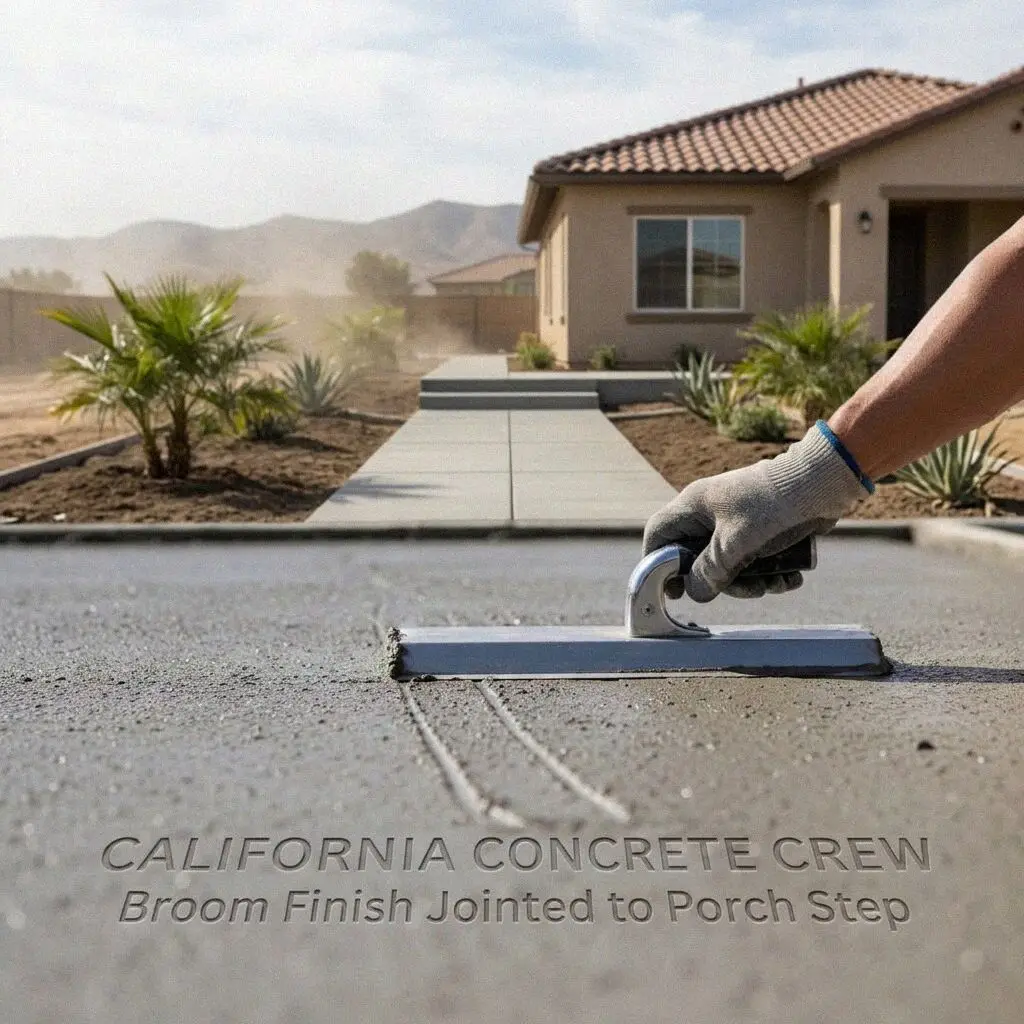
Pouring a concrete sidewalk along a residential entry path in Corona
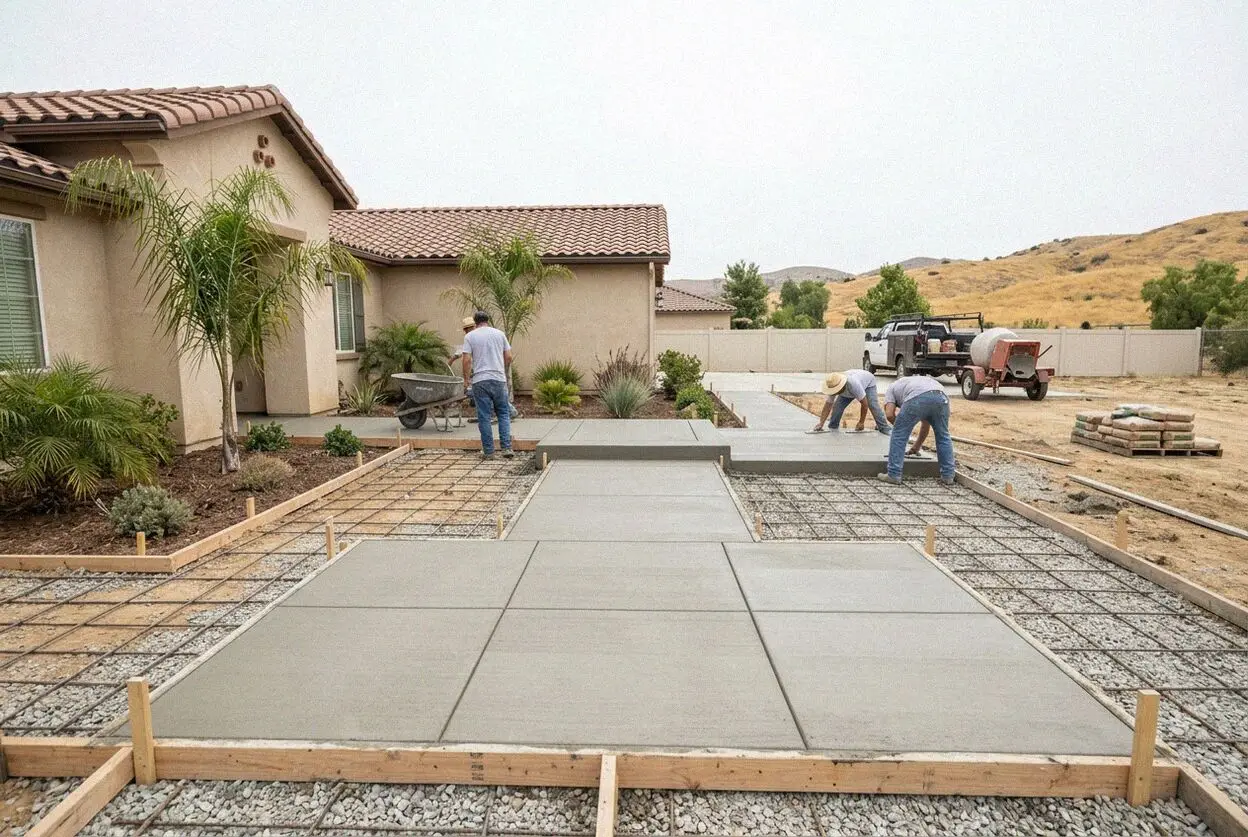
Forms and steel reinforcement for a walkway at a Corona residence

Subbase Work

Pouring a Walkway on a Shifting Corona Lot

Corona sits over alluvial fan deposits that create severe shrink and swell cycles under pedestrian pathways. The USDA Web Soil Survey maps high plasticity clays throughout local residential tracts, where seasonal rainfall causes the ground beneath unreinforced slabs to heave. When summer dry heat settles across Riverside County, moisture evaporates rapidly and the subgrade retreats, leaving hollows that snap thin concrete.

Miguel Arreola brings 17 years of trade experience prior to founding the company in 2019, directing every sidewalk pour around these ground shifts. A direct pour on native clay invariably buckles at the edges within two wet winters. We excavate native soil to a depth of eight inches, placing four inches of crushed aggregate base compacted mechanically before setting forms, ensuring tree roots and clay cannot tilt the walking surface.

Operating under California Contractors State License Board classification CSLB C-8, our crews protect each perimeter with deep isolation joints. Every project carries liability insurance on every job and delivers a written workmanship guarantee against defects in how it was built. We place four inch thick concrete with steel rebar across high traffic pathways, keeping private entries level despite ground movement.


Warning Signs

When is a Corona concrete sidewalk past repairing?

Vertical Concrete Trip Steps

Walking paths that lift half an inch above adjoining panels create immediate stumbling hazards. This shift happens when moisture gets beneath unsealed edges, soaking the raw dirt until it expands unevenly. Ignoring the offset allows edge corners to fracture under foot traffic.

Temescal Clay Slab Lifting

Subdivisions built during the 1990s across south Corona frequently experience soil heave. Local clay layers sitting three feet below grade swell significantly during January rainstorms, pushing unanchored concrete upward. The lifted sections remain displaced during dry weather.

Hairline Surface Spalling

Surface flaking looks like a minor aesthetic blemish caused by heat, but it actually signals trapped moisture beneath the cream coat. Left untreated for twelve months, winter moisture penetrates the aggregate core, causing systemic crumbling that requires full replacement.

Severed Expansion Joints

Gaps where panels pull apart allow irrigation runoff to pour directly under the walkway foundation. Over a six month period, this uncontrolled water washes away subgrade dirt, creating unsupported hollows beneath the concrete that collapse under normal residential deliveries.

Core Elements

What Every Corona Sidewalk Build Includes

Every walkway we build adheres to rigid structural specifications engineered specifically for Riverside County soil movement, preventing premature cracking, shifting corners, and hazardous surface offsets for decades.

Old Concrete Removal

We break out cracked concrete and haul debris directly to Inland Empire recycling centers, clearing down to raw subgrade.

Subgrade Compaction Test

Crews test the native dirt for soft pockets; any unstable soil is excavated and replaced with clean fill before forming.

Crushed Base Layer

A four inch layer of class two crushed rock is spread and compacted to 95 percent relative density to stop soil heave.

Commercial Ready Mix

We pour 4,000 PSI concrete batch mix engineered for rapid strength gain, offering optional integral color tones.

Tooled Edge Grooving

Hand tooled radius edges and matched expansion joints are cut to isolate walkways from adjacent foundations and curbs.

Steel Rebar Grid

Grade 60 steel reinforcement sits on chairs two inches above the base, extending walkway service life beyond 30 years.

Jobsite Debris Sweep

Wood forms are stripped, perimeter dirt is backfilled flush, and adjoining surfaces are pressure washed thoroughly.

Written Guarantee

Every installation comes with a written workmanship guarantee against defects in how it was built, covering all structural failures.

Surface Options

Corona Sidewalk Construction Types Compared

Selecting the correct walkway build depends on yard gradients, pedestrian frequency, and the severity of local clay expansion, ensuring your path remains stable without unexpected settling or cracking over decades of use.

OptionExpected LifeIdeal SettingMaintenanceCure Duration
Broom Finish Concrete30 to 40 years of serviceFront entries and public accessOccasional pressure washing3 days for foot traffic
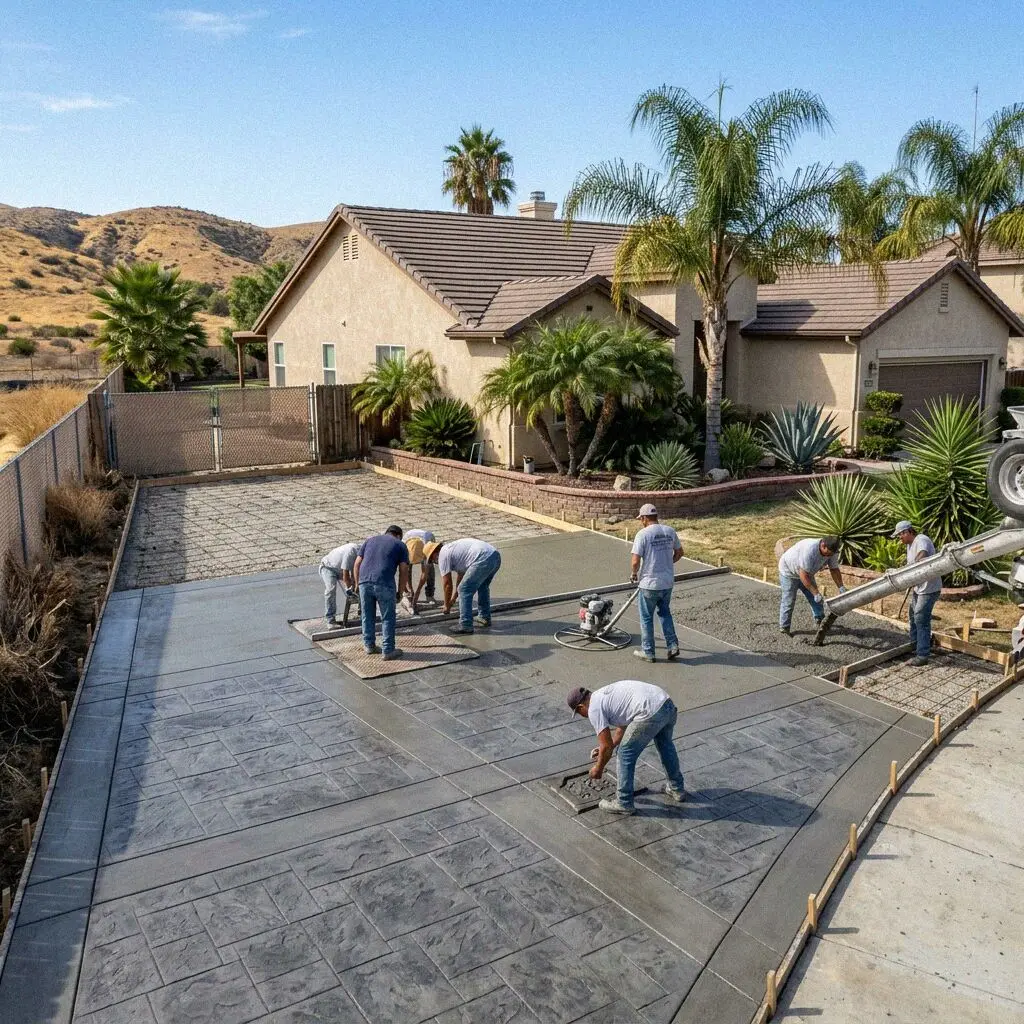
Stamped Decorative Slab25 to 35 years of serviceGarden paths and accent walkwaysPenetrating sealer every 3 years4 days before normal foot use
Exposed Aggregate Path35+ years of continuous useClassic ranch architectural homesResealing every 4 to 5 years3 days before foot traffic
Interlocking Paver Walk20 to 30 years of durabilitySteep slopes and narrow side yardsJoint sand sweeping every 2 yearsImmediate use upon completion

Our on site evaluation measures local soil conditions and boundary grades to determine which walkway specification matches your Corona residential property.

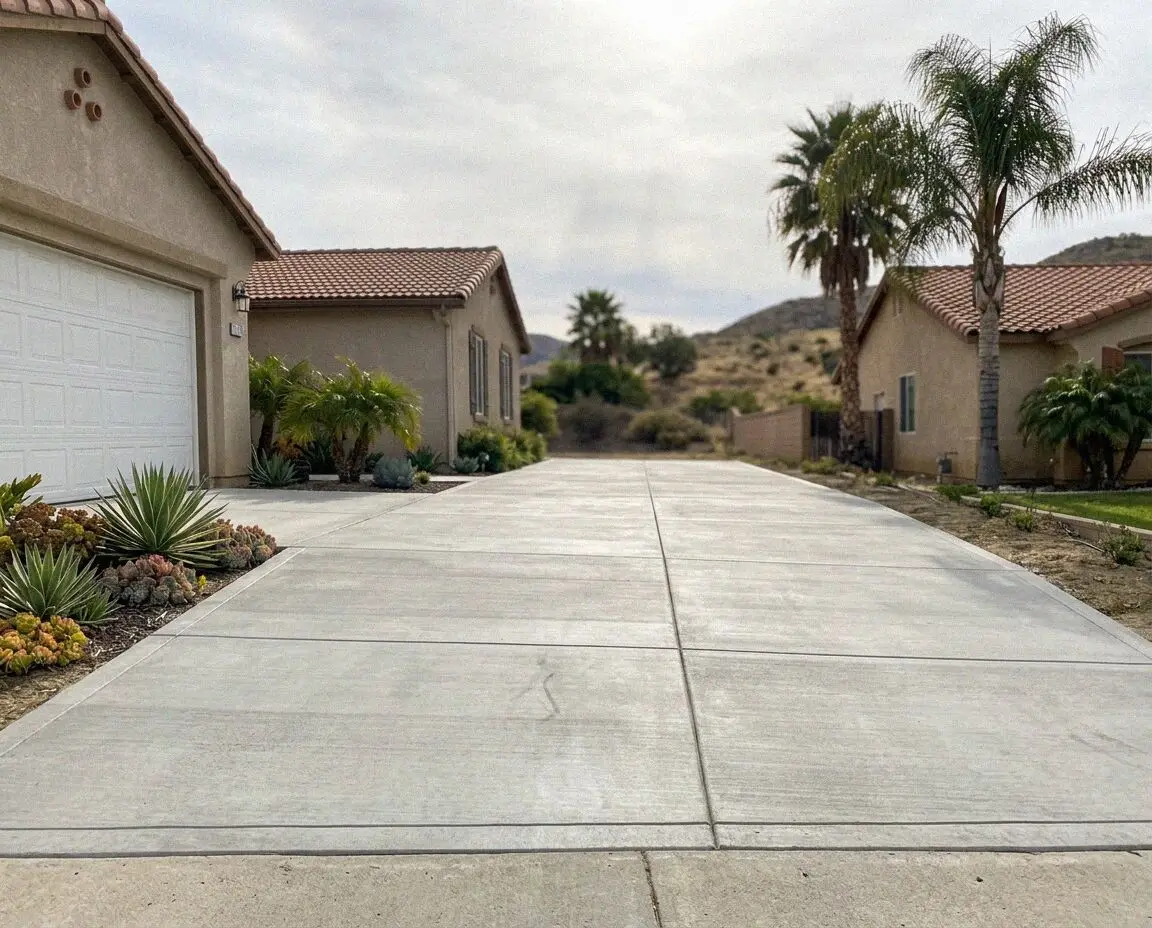
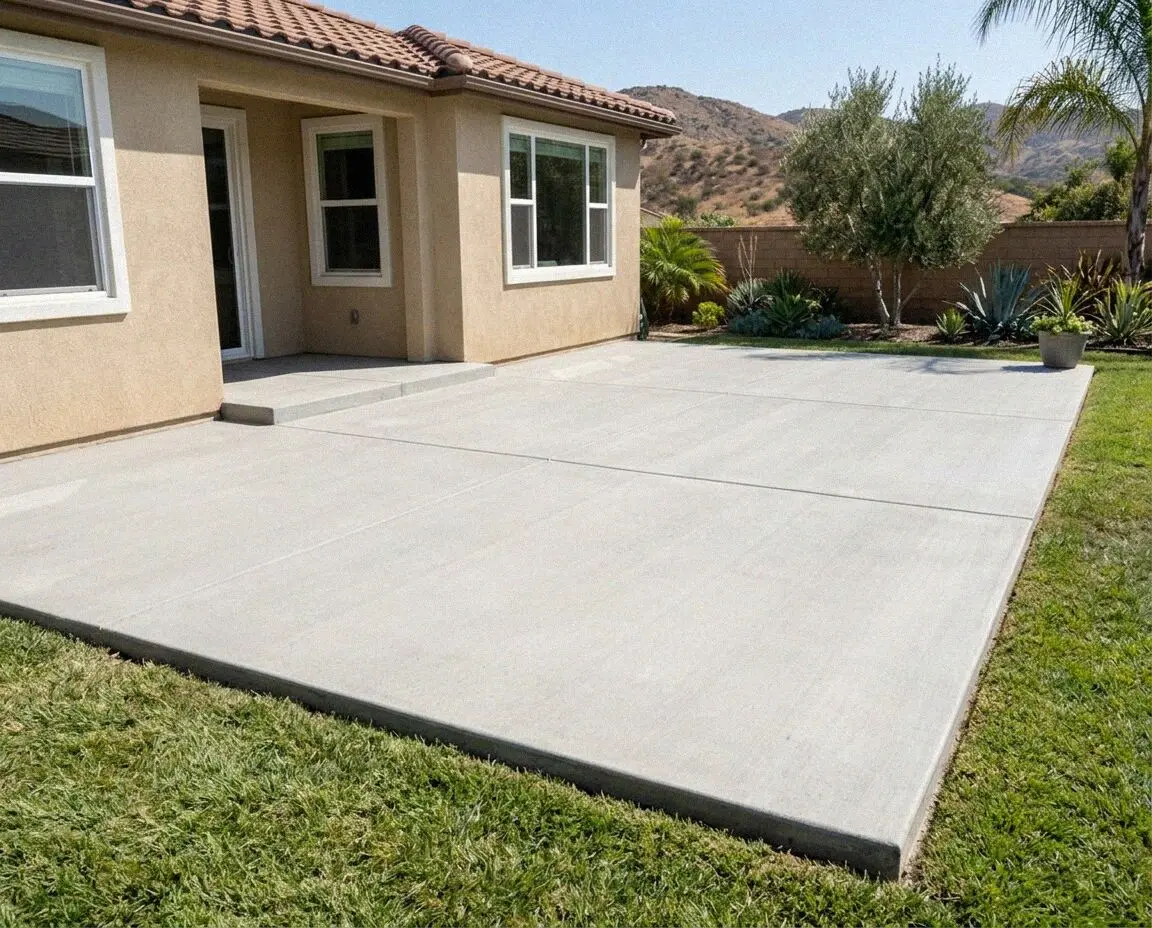
Newly finished concrete sidewalk beside a residential lawn in Corona

Regional Soil

What a Concrete Walkway in Corona Must Withstand

Corona installations must survive summer heat peaks above 100 degrees and expansive clay soils that shift significantly during our 14 inches of annual rainfall.

Across Corona, where 167,836 residents navigate neighborhood walkways daily, shifting alluvial subgrades demand rigorous structural reinforcement. Runoff from the Santa Ana Mountains deposits dense clay sediment throughout local parcels. When moisture saturates this soil layer, unreinforced slabs lift along the perimeter, cracking at cold joints. We excavate four extra inches of native dirt and replace it with engineered aggregate to ensure the base remains completely stable.

Guidance from the Portland Cement Association emphasizes that control joints must be sawed to one quarter of the slab depth to guide shrinkage cracks. In the Inland Empire, Santa Ana winds rapidly accelerate surface drying during autumn months. Without proper curing compounds and frequent joint spacing every four to five feet, standard sidewalk panels develop random diagonal fractures that widen whenever winter precipitation saturates the subgrade.

Project Steps

How We Build a Concrete Sidewalk in Corona

Every stage of construction follows strict municipal guidelines and soil preparation standards, ensuring your new pathway stays level, fully supported, and durable through severe weather cycles.

1

On Site Walk Inspection

We inspect yard slopes, examine root intrusion, and verify grade transitions. Every estimate is measured and written on site

2

Permit And Scheduling

You choose finishes while we file permits through the Corona Public Works Department, securing your start date on the schedule.

3

Demolition And Base Prep

Old concrete is hauled to local recyclers, the subgrade is compacted, and failing dirt is replaced with crushed aggregate.

4

Forming And Concrete Pour

Crews set wood forms, place steel reinforcement, and pour 4,000 PSI ready mix concrete under direct CSLB C-8 supervision.

5

Final Clean And Walk

We strip forms, sweep adjacent pavement, walk the site with you, and hand over a written workmanship guarantee against defects in how it was built.

Pricing Scope

What Determines Your Corona Sidewalk Estimate

Walkway estimates reflect the total square footage, demolition depth, ground stabilization requirements, and material upgrades needed to construct a permanent pathway across shifting local soil conditions.

Single Family Front Walk

Overall length, existing tree root presence, and connection points to city sidewalks or driveways establish base pricing scope.

Expansive Clay Depth

Heavy clay pockets require deeper excavation and supplementary aggregate base to stop seasonal soil swelling from lifting panels.

Steep Slope Terracing

Navigating hillsides requires integrated retaining curbs, stepped concrete forms, and manual wheelbarrow access that adds time.

Decorative Color Finish

Integral color blends, specialized surface stamps, and protective sealers require on site evaluation to match exterior home architecture.

Every property presents distinct grading and access factors, which is why we calculate all project specifications during your physical site visit. (951) 555-0174 or send us a message.

Schedule Your On Site Corona Walk Estimate

We inspect your yard conditions, evaluate subgrade stability, and provide an itemized written quote covering all excavation, forming, and concrete placement, with calls answered within 1 business day by our local team.

Request a Free Estimate

Written on site · No obligation

By submitting, you agree to our disclosure and consent terms, including being contacted by Circle City Corona Concrete.

Client Reviews

What Corona Homeowners Say About Our Walkways

Read how our engineered subbase preparation and careful joint placement keep residential paths flat and trip free across different Corona neighborhoods over years of use.

Google review

“Our front walkway had lifted two inches over old tree roots, creating a dangerous step. Miguel Arreola and his crew removed the broken slab, excavated four inches of clay, and poured 45 linear feet of fresh broom finish concrete in two days. The path remains completely level.”

David R., CoronaConcrete Sidewalk · Google · 2025
Google review

“We had a tight three foot side yard along a sloping lot that two other contractors refused to touch. The crew brought equipment through our narrow side gate, placed reinforced aggregate, and poured 60 feet of walkway over three days. The drainage slope directs water perfectly.”

J. Okafor, CoronaSide Yard Walkway · Google · 2026
Facebook review

“After pouring our 40 foot entry walkway, the crew conducted a thorough walk through across every joint. When we had questions weeks later, they returned our message and confirmed a written workmanship guarantee against defects in how it was built covers our installation.”

S. Whitfield, CoronaFront Walkway Build · Facebook · 2026

Project Answers

Sidewalk Questions Asked by Corona Homeowners

Understand the engineering details, permitting rules, site preparations, and material standards that ensure your Corona sidewalk project succeeds from start to finish.

(951) 555-0174
  • How is a Corona concrete sidewalk estimate calculated?

    Total cost depends on walkway dimensions, removal of broken slabs, subgrade clay stability, and required access paths. Demolishing damaged pathways embedded with tree roots requires mechanical breakout equipment, while steep hillside entries demand retaining curbs. We calculate exact square footage and base thickness during our site visit to provide a firm, itemized written proposal.

  • How long does sidewalk building take in Corona?

    A standard residential walkway takes two to three working days from initial excavation to final finishing. Tight property lines, massive tree root removals, or severe ground slopes can extend preparation by an extra day. Pedestrians can walk on the surface after 24 hours of curing, while full structural strength is reached across a standard 28 day moisture curing window.

  • What is included in a Corona sidewalk installation?

    Our proposal includes complete ground excavation, crushed base compaction, forming, steel reinforcement, 4,000 PSI concrete placement, tooled joints, and debris haul away. Homeowners often expect perimeter backfilling and surface pressure washing to be extra costs, but we include them as standard line items on every estimate to leave your property completely tidy and clean.

  • Do I need a permit for a sidewalk in Corona?

    Work along municipal right of way zones requires an encroachment permit from the Corona Public Works Department, which we submit and handle on your behalf. Walkways built entirely within private property boundaries generally require no municipal building permits, though walls exceeding four feet or major hillside grade alterations always demand approved city engineering plans.

  • When is the best time of year for walkways in Corona?

    Autumn and early spring provide the most consistent conditions, with daytime temperatures averaging 72 degrees for even concrete hydration. Pouring in midsummer requires shade canopies and rapid finishing before 100 degree heat causes surface flash setting, while winter rainy spells can delay subgrade compaction by several days until the native clay dries out sufficiently.

  • What guarantee comes with the sidewalk work here?

    Every project comes with a written workmanship guarantee against defects in how it was built, ensuring proper thickness, base compaction, and reinforcement standards. Neither policy covers unpreventable ground movement from major seismic shifts or uncontrolled tree root lifting, giving you clear transparency regarding warranty boundaries.

  • Which materials and equipment do you work with?

    We pour 4,000 PSI ready mix concrete sourced from certified regional batch plants, reinforced with Grade 60 steel rebar for high tensile support. Heavy mechanical plate compactors achieve 95 percent base density over class two crushed aggregate, preventing slab voids, while diamond blade saws cut clean control joints to regulate thermal movement across Inland Empire seasons.

  • Do I need to be home while the walkway is poured?

    You do not need to be present during construction once we confirm access gates, water connections, and boundary forms on the first morning. We ask that vehicles be parked on the street before our 7 AM arrival to keep driveways clear. Should any questions arise during the work, Miguel Arreola remains available by phone, and we schedule a final walkthrough at your convenience.

Service Area

Where We Build Concrete Walkways Around Corona

From our Corona base, our crews build durable, reinforced concrete walkways for homeowners throughout Riverside County and neighboring Inland Empire communities.

Show All Areas We Serve

Book Your Corona Concrete Sidewalk Inspection

We inspect your existing walkway grade, test native clay soil expansion, and measure exact subbase excavation depths on site, returning your written proposal within 1 business day to schedule your build.